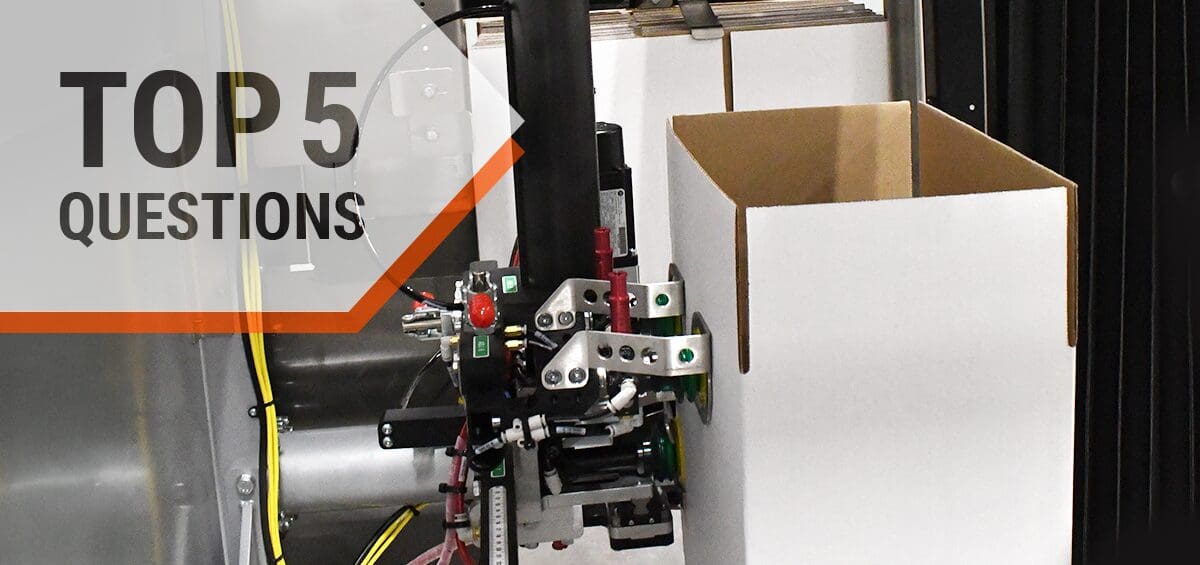
Top 5 Questions to Ask Yourself Before Buying a Case Erector
Buying confidence relies on good planning. We’ll outline five questions you can use to evaluate your buying field and the machine you are considering.
Introduction At a Glance If your workers are stuck on one role, you’re watching repetitive-strain injuries rise, or your quality is taking a hit by hand-packing; you’ve found the signal to start automating. The choice of when to automate is more than a look at purchase price – it’s often based on volume. The Three … Read more
Since robotic and traditional case erectors often land in the same price range, the buying decision is difficult to base on purchase price alone. We’ll help you evaluate the loaded cost of a case erector based on labor, parts, and turnover.
Introduction At a Glance A decisive question: “Does a dedicated person close cases for most of a shift?” If yes, a fully automatic sealer is probably the right choice to save labor costs. If no – e.g. the operator only touches the sealer occasionally, or the whole line is hand-pack, hand-load – semi-automatic is likely … Read more
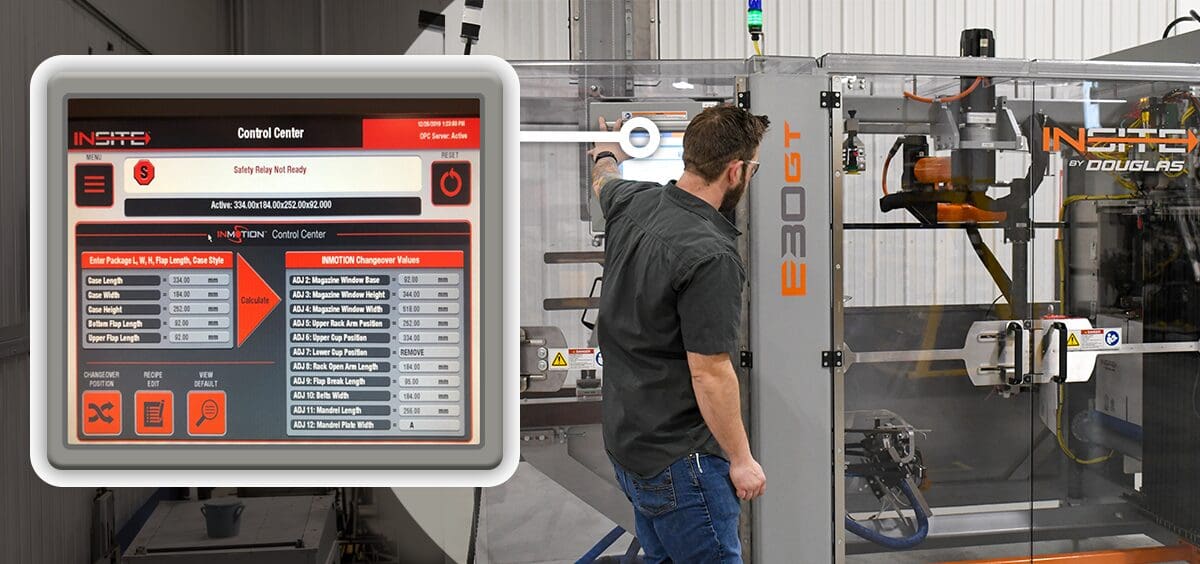
Adding a new case size to a case erector usually means a service call, but if your case erector features parameterization, it changes the game. Your in-house operator enters four values, and the machine accurately calculates the rest, all within five minutes.
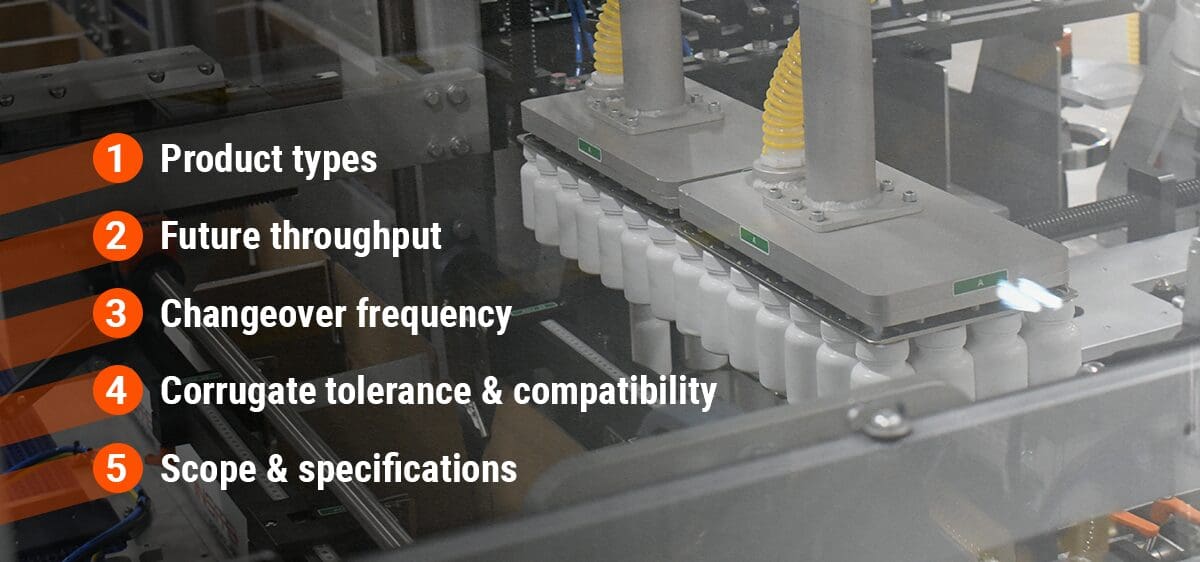
Wrong decisions when buying your case loader spill onto the floor as extra costs, slow changeovers, and late change orders. Here are 5 things to clarify before you talk to vendors.
Adding a new case size to a case erector usually means a service call, but if your case erector features parameterization, it changes the game. Your in-house operator enters four values, and the machine accurately calculates the rest, all within five minutes.
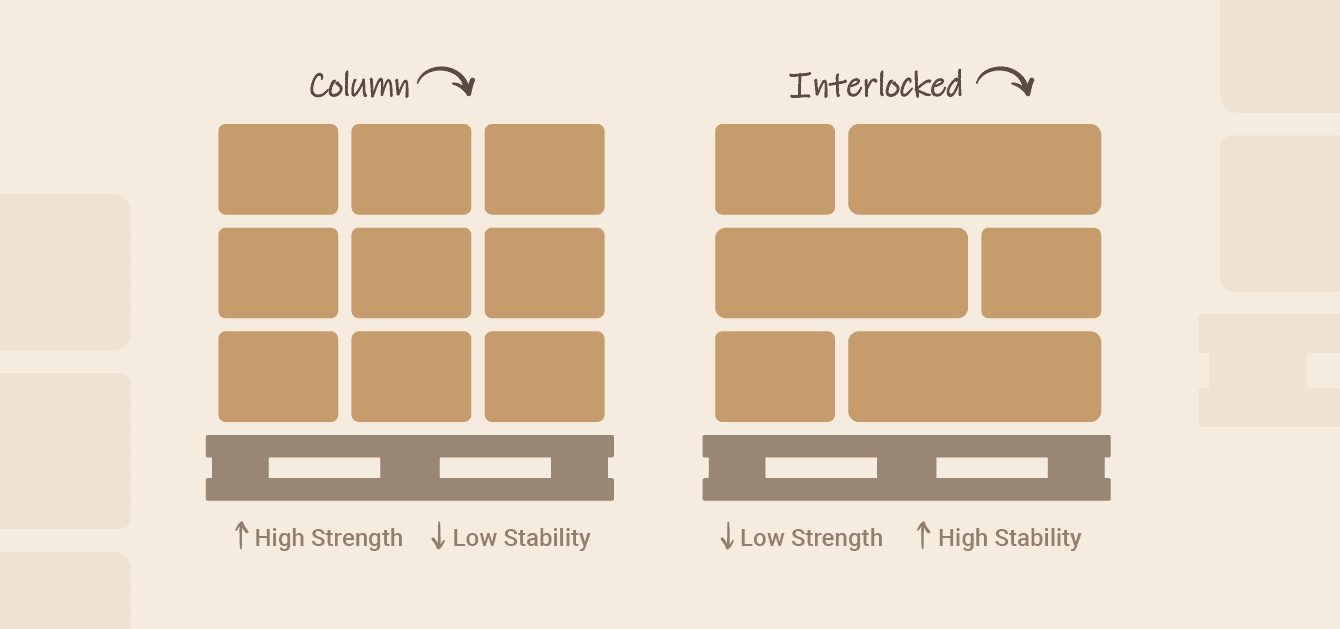
Conventional and robotic palletizers do the same job — stacking cases onto a pallet in a stable pattern — through fundamentally different mechanics. And “conventional” itself splits into two distinct architectures, high-level and low-level, that fit different operating profiles. The choice isn’t about which one is better in the abstract; it’s about which one matches your throughput, SKU mix, floorspace, and capital profile.
Introduction At a Glance Most common faults on case erectors and sealers can be traced to a small number of root causes that operators can clear without a service call. Erector Top 3 faults (Rack Open Servo Fault, Setup Missed 3 Blanks, Lost Case at Handoff) all trace to one thing: the magazine window is … Read more
Introduction At a Glance Tape selection for a case erector or sealer comes down to six decision factors. Width — Your tape head determines whether you need 2-inch or 3-inch Thickness (gauge) — Most carton-sealing tape runs 1.5 to 3 mil. Thinner is cheaper per roll but is the leading source of breakage on automated … Read more