Introduction
At a Glance
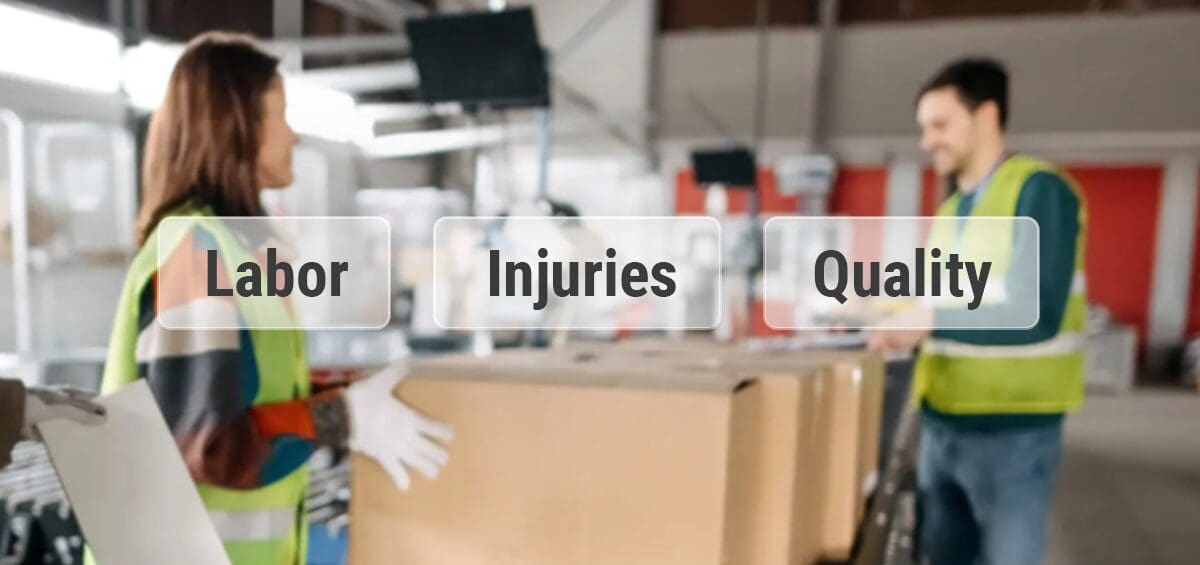
If your workers are stuck on one role, you’re watching repetitive-strain injuries rise, or your quality is taking a hit by hand-packing; you’ve found the signal to start automating. The choice of when to automate is more than a look at purchase price – it’s often based on volume.
The Three Signals:
- Labor
- Injuries
- Quality
Where automation softens its blow: you don’t have to do it all at once, and you already have an idea where manual labor hurts the most. You also know your volume. High-volume operations often merit automation, while low-volume operations can be more choosey. Waiting to automate isn’t a safe choice, it can be a major liability. Make sure you know the signs when the time comes.
Arguably, an owner’s biggest deciding factor in when and whether to automate is cost. They look at the equipment quote, look at what they pay the person folding and taping boxes, and they decide the machine’s the more expensive option. Bing, bang, boom, no automating today.
The problem is that cost is multifaceted, especially when you’re accounting for human labor. Recruiting and training, turnover, workers’ compensation… all of these things add to the cost of one worker. Packaging work is repetitive and hard on the body. Turnover is high. Low throughput because you’re struggling with staffing a role is the costliest of all – it’s orders or product you don’t ship.
If your time is drastically impacted by turnover, or your workers are dedicated solely to filling or sealing boxes, you’re probably closer to automation than you think. And it’s important that you recognize that early, so that you don’t feel the consequences down the line.
In this article, we’ll cover:
- The three signals that show up on your floor first
- The factors that help you start tackling automation
- The situations where automation is right and the ones where it’s not
- Questions to bring with you to vendors
- The stakes that accompany waiting vs. starting to automate now
Signals Show Up on the Floor First
The first signs that it’s time to automate show up on the floor itself. Not as a capital decision. They primarily cluster in three places of operational friction:
Labor and Throughput
If you’re posting the same positions over and over and still falling short of necessary throughput, your white flag is waving. Not meeting order requirements is a severe problem. Automation is the solution.
Worker Injury
If you’re noticing repetitive-strain injuries and workers’ comp claims rising, you’ve found a sign to take seriously. Claims, lost productivity, and turnover are avoidable problems. The point of automating is not only increasing throughput, but allowing your employees to fill more useful, safe, and fulfilling roles than folding box flaps all day.
Note: Of the three hand-packing stations, case erecting is where the most injuries and ergonomic strain concentrate. It’s high in steps and physical motion.
Output Quality
Hand-packing product introduces human variability. Missing or added units, malformed cases, and product damage are some of the consequences you may begin to – or have already – experienced. Imperfect cases are hard to palletize tightly, and loose pallets can topple in transit. Automation brings consistency where hand-packing naturally drifts.
A strategic fourth signal you may see is excessive outsourcing. If you’re still outsourcing packaging because it’s not your “core business,” you’re paying a margin and giving up quality and scheduling control. Contract packaging is the right call really only at the startup scale. Bringing the work in-house is not only going to be beneficial, but also just part of natural company growth.
Note: You’ll see the topic of automation signals framed elsewhere as “five” or “seven signs.” Honestly, the signs genuinely do cluster in the three areas we’ve outlined: labor, injury, and quality, with outsourcing being a strategic fourth. If you see two or three of these signs at once, the line is talking to you.
How to Scale the Brick Wall of Automating
Once you believe it’s time to automate, you come to the brick wall of actually starting. Here are two ideas that may soften the blow a bit and maybe provide a doorway:
Automation isn’t all or nothing. Whether it’s all at once or one-at-a-time, the decision is yours. A semi-automatic case sealer is the lowest rung of the ladder – an operator folds the flaps and feeds the box into the machine to tape. It still saves motion and improves consistency and throughput.
Here’s a longer timeline:

You already know where it hurts. Which part of the process is the most painful and expensive to do manually? If you don’t know, your team likely does. If you want to confirm, do a quick time study – track where your team spends the most time, and where errors occur most. For most operations, the answer is case erecting. But the semi-automatic case sealer is a good way to dip your toes in the water before jumping in.
When is Automation the Right Move?
As hard as we’ve been rooting for automation so far, we’ll also be the first to say that it’s not always the right move. The key is volume. High-volume operations are far more likely to justify automation than low-volume ones.
Forcing equipment onto a line that won’t run enough product to use it – not a good capital decision. The same logic applies to what you decide to start with: a continuous-motion system on a line that ships a few hundred cases a day is likely not the right move.
Be honest about where your bottleneck actually is. If your throughput constraint is upstream (e.g. filling, labeling, etc.), then automating the case sealer is not going to fix your problems. That’s why we suggested the time study, because it points you at the real constraint. Sometimes it’s the packaging, and sometimes it’s not.
The Questions You Should Bring to the Vendor
If you’re worried about what questions to bring to your meeting with the vendor, here are some recommendations that go past the spec sheet:
- How many adjustment points does a changeover require? How does that compare to other machines?
Fewer adjustment points mean faster changeovers and fewer chances for operator error. - Is the changeover actually tool-less, or does it need a wrench?
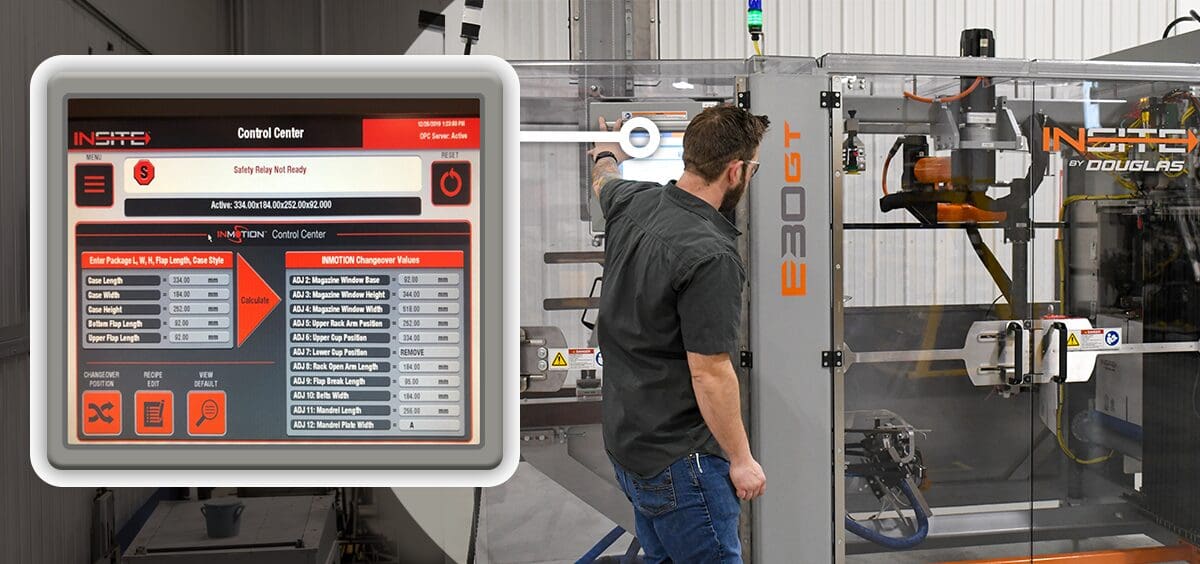
Tool-less is a higher standard than “fast changeover.” It refers to levers and quick releases in place of tools. Also, ask for a timed demonstration. - Which of my current products will work on day one? What happens when I add new ones?
Walk the vendor through your actual product list, including variants you may want to launch later. In consumer goods, marketing decisions drive packaging changes constantly, and the equipment has to handle case sizes you don’t run yet. - What does the line look like in three years if my throughput doubles?
The right investment isn’t always the cheapest one. Sometimes it’s best to accept the next ladder rung because it’s the choice that accommodates your next steps. For example, a case sealer that can’t handle an upstream case erector, is a dead-end. - What do training and documentation look like after installation?
Even a good machine underperforms with disorganized change parts, lack of posted procedure, and minimal operator training. Ask what’s included and what costs extra.
Waiting vs. Starting Now – What Are the Stakes?
What happens if you wait too long to automate? The costs keep building:
- The roles you can’t fill become products you can’t ship
- The injuries become claims and higher turnover
- The hand-pack variability becomes chargebacks
Done right, the automation process is a much smoother ride:
- Workers move from repetitive box-work to jobs that use more of their capabilities
- Throughput stops depending on whether you could staff the line this week
- Quality holds because machines don’t have bad days
- You start on the rung you can justify today, and upgrade when your volume merits
The question was never really whether automation makes sense for your line. At meaningful volume, it almost always does. The question is, What is the wait costing you? It matters whether you start doing the math before the signals turn into order shortfalls and worker injuries.
Evaluating Automation?
Give us a call. INSITE’s team of specialists can answer questions and discuss automation options.