Introduction
At a Glance
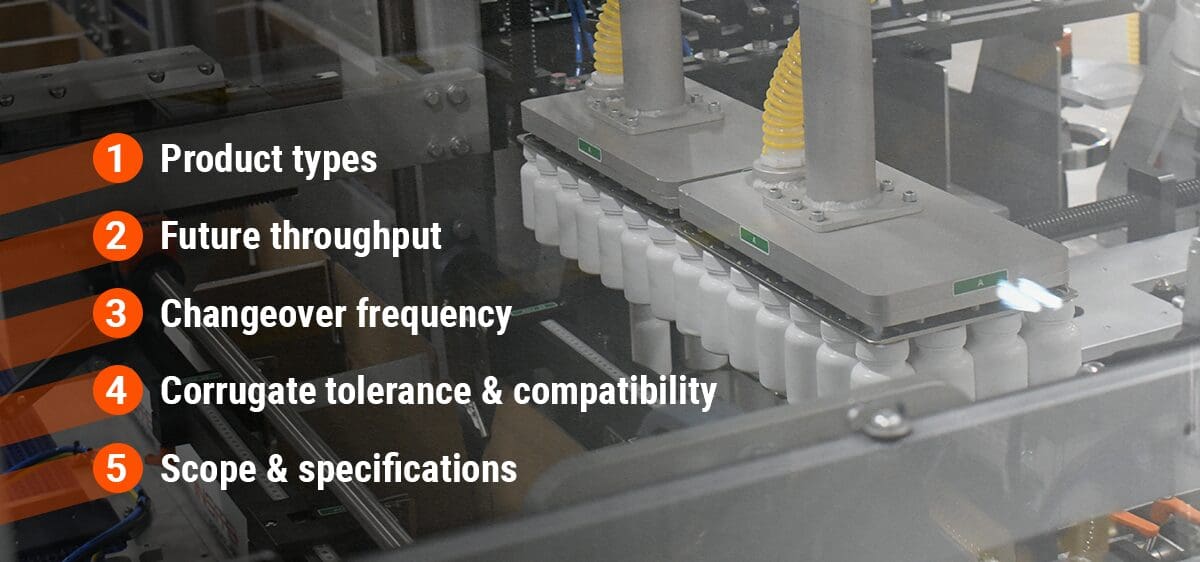
Planning well before starting a case loader project begins before you even speak with vendors. Clarify these 5 things before you start the conversations and you’ll be set on a good track to minimize cost and hassle down the road.
- Different product types need different case loaders – know and document your products to prepare for what case loader you’ll need
- Consider throughput needs 5-10 years from now – reasonably plan to avoid premature case loader replacement
- Changeover frequency and your capacity for complexity – if changeovers are a frequent occurrence for your line, consider the machine type and skill level you’ll need for your machine
- Corrugate tolerance and compatibility – have your OEM test your corrugate with their machine and ask about machine tolerance to corrugate variations
- Document clear specifications and scope with the right people involved – keep your needs clear and explore the possibility of vendor partnerships
In this article, we’ll cover:
- Why different product types need different case loaders to avoid complexity and cost
- How to size your machine for current and future needs
- How to evaluate the importance of minimizing your changeover
- How to catch cardboard and machine compatibility issues before you order
- What requirements to specify and when
- Why it’s important to invest in partner relationships
Whether you’re ready to sign a check or still cautiously planning, there are some details that you should know before you sit down to buy a case loader. Buying any equipment can be stressful, but planning well can ease your stress and your future burden.
1. Different Product Types Need Different Case Loaders
Product handling is the key factor in different case loaders for different product types. To avoid damage and to pack your product in the correct format, you need a case loader designed for your specific product type. It’s likely that your product won’t even run on a loader built for a different product type.
The reason comes down to how product accumulates. Round, rigid containers sit neatly, and they can move in long lines without problems. Flexible containers – not so much. Bags compress, and often their product isn’t meant to be pushed, squished, or crushed.
Additional handling devices are needed to control products that can’t hold their own shape. These additional components often drive increases in the cost of your equipment.
Pro Tip
Retrofitting for a new product type is one of the more avoidable costs regarding your case loader. Consider developing a document of every product that will run on the line – product type, container format, dimensions, pack patterns, and plan for new products and sizes upcoming.
Be sure to solidify this list so you don’t end up with features added to the machine that are unnecessary and which will be stripped out later.
2. You Should Account for Your Line 5-10 Years from Now
When buyers look at case erectors, speed is one of the first questions asked. Case loaders, on the other hand, can be overlooked. But case loaders have one job when the line is running: keep up. Your case loader should be able to match the speed of the fastest part of your line.
This means that any projected growth should be accounted for now – before you buy. It may seem odd to buy a machine with a greater capacity than your current line, but it will save you a premature replacement later. However, be reasonable in your scope. Don’t go too far and oversize or over spec for what you actually need – that is wasted capital.
Take a minute to think about what your line will look like 5-10 years from now. Do you anticipate major speed- or size-based growth? More product lines? Expanded automation?
3. Changeover Frequency and Your Capacity for Complexity
If your operation runs many products or case sizes, something you should account for when buying, is changeover. While sometimes overlooked, type of machine can make or break your changeover capacity.
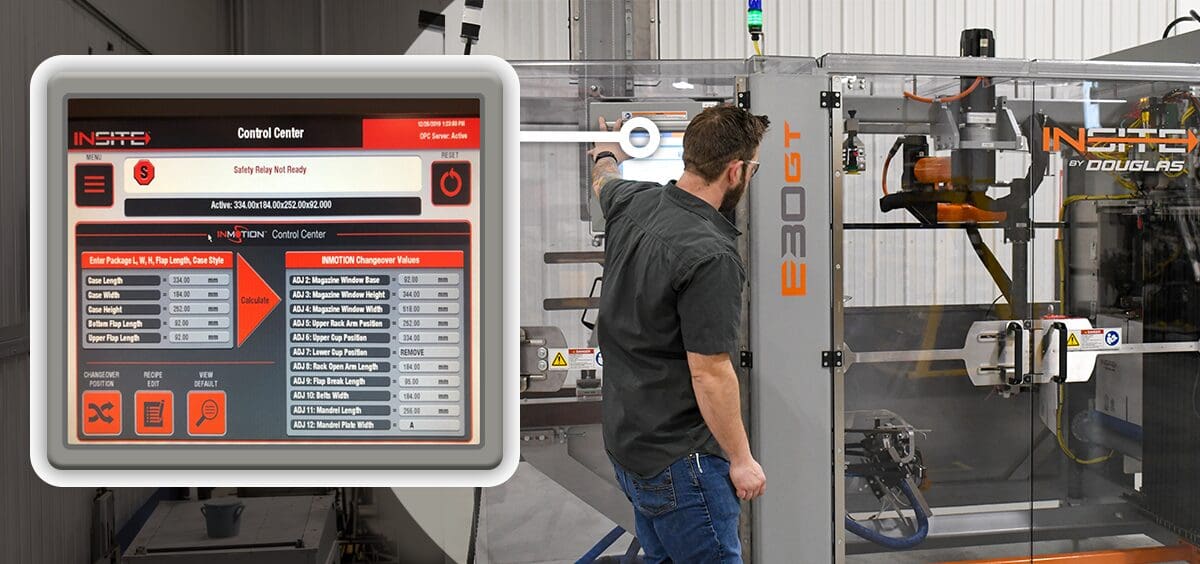
Mechanical machines require more hands-on adjustments and fine-tuning from a skilled operator. On the other hand, parameter-driven machines have more automatic adjustments, and they provide exact settings for physical adjustment points. This means there’s less tweaking and less skill required. If you frequently perform changeovers, this might be a distinction worth considering. Check out our article about Understanding Case Erector Parameterization for more information.
Pro Tip
Ask your vendor these two questions:
- “Can you show me documented changeover times for real production conditions?”
- “What level of operator skill do these times assume?”
You may find that the second question informs you just as much as the first.
4. Corrugate Testing with Your Vendor/OEM
Cardboard is a naturally variable material. It bends, warps, and softens, based on its environment. Packaging equipment differs in its tolerance and ability to handle variability. When asked, some OEMs will evaluate your case blanks before the machine is even specified. You send samples, they assess reliability, and you learn concerns before ordering.
This step wards off post-installation hassle and cost. For even better understanding, ask how the machine handles your specific production environment (temperature-controlled, humidity levels, etc.). Cardboard behaves differently based on its environment, and you’ll want to know how forgiving your machine is.
5. Make Your Requirements Specific and Cover Them Early
Buyers who enter vendor conversations with vague requirements will run into scope creep, unnecessary features, and late change orders. This will cause changes at the time when they cost the most – at installation.
A change at the design stage costs time; a change at the manufacturing stage costs money; and a change at the installation stage costs both. The earlier your requirements enter the conversation, the more your cost and blood pressure stay low.
What requirements should you specify? They don’t need to be elaborate, but they should be specific and written out before anyone draws the layout:
- Product and container types
- Required throughput
- Changeover frequency and time goals
- Sealing methods
- Case types
- Available floor space
- Floor plan of the facility, equipment location and machine hand
- Anything else that is pertinent to your specific line or facility
Pro Tip
Case loader projects often start in corporate engineering, which may be in a different part of the country from the plant. Verify your floor plan against the actual facility before it’s the basis for a design. Out-of-date floor plans are a common source of late change orders.
Bonus: Vendor Partnerships
An important step in the planning process is understanding the right types of partners for your specific project. Not every project requires every type of partner, but some projects see real benefit. Choosing the right partner in each or all these categories will determine how painful or successful your project is.
Here are some common partnerships to consider:
Equipment OEM
We’ve mentioned the OEM a few times already. They do more than just build; they sell and support the machines. They’ll evaluate your needs and goals and provide machine maintenance post-sell. For a smaller project replacing one piece of equipment, this may be all you need.
Integrator
The purpose of integrators is to coordinate your whole line. They’ll do the buying and connecting of all the equipment, both up- and down-stream. For a full multi-machine line, an integrator or engineering firm is the right choice, rather than a single vendor.
Reseller or Sales Agent
Resellers or sales agents work across multiple vendors as consultants. They match your technology specs to applications best-suited for you. They can be especially useful when you don’t have a long relationship with any one OEM.
Looking Forward: Relationships Last Beyond the Sale
Case loaders live long lives. After your machine is installed, the relationship you have with your OEM or vendor matters just as much as the machine itself. When something goes wrong – note the word, “when,” not “if” – how fast they respond will determine the length of your downtime.
Ask about response times for emergency service calls, possibilities for remote diagnostics, and technicians’ stock for common parts. The more you can trust your OEM or vendor, the better you’ll sleep at night a few years down the road. What you’re buying is more than steel; it’s a knowledge partner to keep the line running.
New to Automated Case Loaders?
Give us a call. INSITE’s team of specialists are here to answer questions and equip you with knowledge.