At a Glance
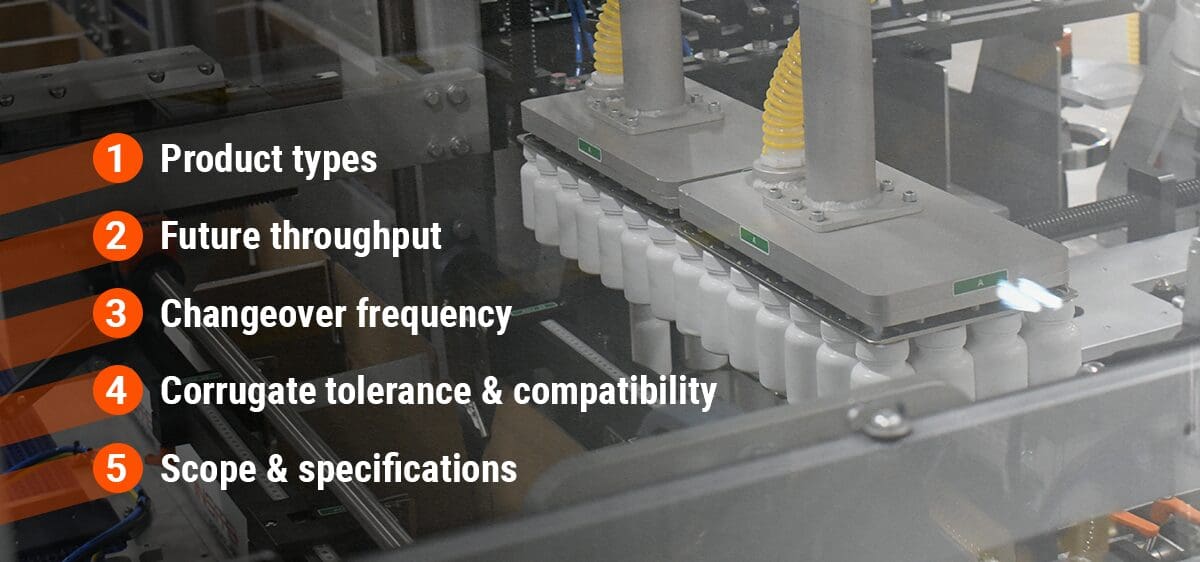
Before you start the process of buying a case erector, ask five questions to determine what sort of machine you need:
- What is my case size and type?
- How fast does my line need to run?
- Are my cases right-handed or left-handed?
- How many case sizes do we run? How often do we change over?
- What will this machine’s total cost of ownership be?
Also consider evaluating case and machine compatibility with your supplier before you sign the papers. If you do these things, you’ll find yourself more confident and better prepared to buy.
Introduction
Everyone wants to walk into the room for a vendor meeting feeling competent and knowledgeable. But just like a job interview, confidence requires planning and preparedness. In this article, we’ll guide you through five questions that can help you prepare for the case erector buying process.
These questions will help narrow your field of machines with the following categories:
- Case size and type
- Line speed
- Case orientation (i.e., right-handed or left-handed)
- Changeover frequency
- Machine’s total cost of ownership
Follow what we lay out in this article, and you will find yourself with a smoother buying process, a more accommodating machine, and a more trusted supplier relationship – not to mention a bit of cash left in your budget after all is said and done.
In this article, we’ll cover:
- Why you should evaluate case size and type first
- The speed number that matters when buying a case erector
- What case hand is and why it’s important
- How to account for your changeover needs before you buy
- Three costs that you should rate alongside purchase price
- How to work with your supplier to evaluate case compatibility
1. What is My Case Size and Type?
How you answer this question can narrow the field to machines that will suit your needs. Every machine handles a specific and fixed set of case sizes and types. Sometimes, the case size you run will narrow your field to a single vendor. It’s possible that only one machine on the market will accommodate what you run.
If you know that your line is (or will be) exploring new SKUs in the future, bring those case sizes and types into the conversation as well. Expanding a machine’s size range after installation is one of the more avoidable costs related to cases.
2. How Fast Does My Line Need to Run?
The speed evaluation that really matters is how fast your downstream operation can run. A case erector that outruns your packers isn’t improving efficiency – it’s creating a bottleneck of backed up cases.
How many cases per minute can your line process, post-erector? Time it, count it, and make sure your whole operation agrees. Then you’ll be able to properly evaluate spec sheets throughout the buying process.
3. Are My Cases Right-Handed or Left-Handed?
Case hand may not be the first factor in your mind, but it is fixed on machines. If you run the wrong hand, your branded cases may go down the line backwards or upside-down.
To evaluate case hand, look at which side of your flat the larger panel sits on (for more detail on how to do this, check out our article, “How to Determine RSC Case Hand l Left vs. Right-Hand Cases”).
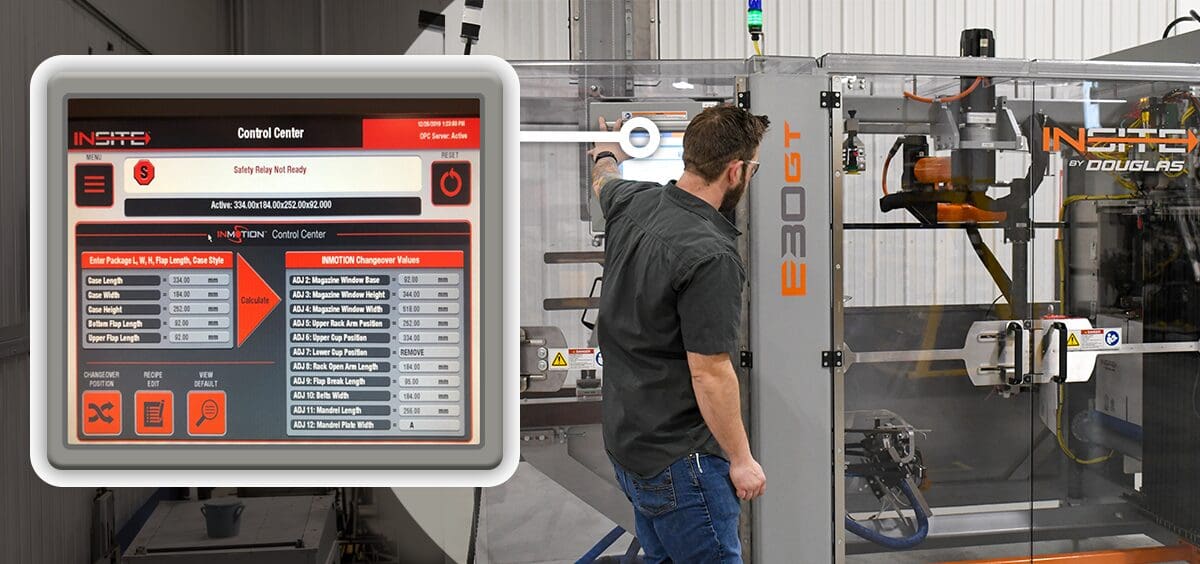
Note: On INSITE machines, case hand also changes which side of the machine the human-machine interface (HMI) sits on.
4. How Many Cases Sizes Do We Run? How Often Do We Change Over?
Changeover is a costly step in secondary packaging. Every time you change over, you pay in operator time, line downtime, and skill requirement. This cost multiplies with every case size you run and every time you switch. If changeover is a regular part of your line’s processes, it should be factored into the buying process.
The type of machine you purchase can affect your changeover complexity and overall capacity – mechanical vs. robotic, parameterization vs. no parameterization. Mechanical machines will naturally take longer to change over with more adjustable components, and parameterization takes much of the changeover complexity out of the game.
Parameterization is a relatively new feature and is a machine-operated sequence that automatically programs your case erector to meet the dimensions of a new case size. Parameterization is one of INSITE’s innovation focuses – our machines allow for changeover to be completed in less than five minutes. For a deeper dive into parameterization, take a look at our recent article, “Understand Parameterization: How Five Minutes Can Replace a Service Visit.”
5. What Will This Machine’s Total Cost of Ownership Be?
It’s easy to see purchase price and call it a day, but machine costs can change greatly once you consider their total cost of ownership (TCO). Don’t underestimate the magnitude of these three cost factors in real TCO:
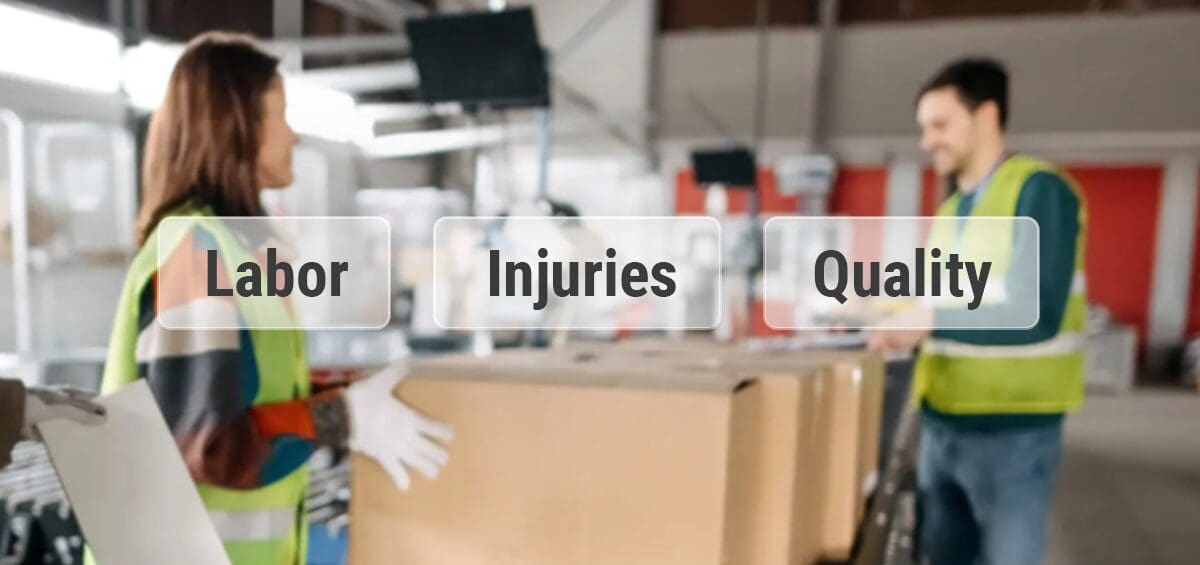
- Labor – Machines that need skilled mechanical tuning bear a staffing burden: the operator you have to employ to get the job done. Operators at this level are harder to find than they used to be, and every shift-gap compounds.
- Future SKUs – If new SKUs are coming, buy a machine that covers their range now. Expanding the range later is costly. And if you opt not to pay those costs, you’ll be paying for premature machine replacement instead.
- Service – In the future, something will inevitably stop working. Response time has a dollar value, and a reachable service team is part of the machine’s long-term TCO. Douglas and INSITE are known for responsive and knowledgeable service teams – not every manufacturer can claim the same.
A Bonus Factor: Can I Test My Cases with a Supplier Pre-Buy?
Many buyers don’t account for an evaluation of their actual case blanks. But if you don’t at least discuss how your cases will run with the machine, you’ll spend more time in installation and startup later, when problems start to arise.
Ask whether your supplier is willing to evaluate your case blanks. If so, the process follows:
- You send in a few case blanks
- The supplier’s team measures them and checks that they’re in-spec
- The supplier sends you feedback (e.g. “This will run well,” “This could be tweaked for reliability,” or “You might see these cosmetic issues arise over time.”)
If you can take this a step further, see if your supplier can run your actual cases and send video and photo results. They may even invite you to their facility for a live demonstration, and you can watch the machine run your materials before you buy.
How a supplier responds to these requests will say something about their aftermarket service as well. At Douglas and INSITE, we try to accommodate these requests to provide buyers with as much surety as possible.
Don’t Underrate These 5 Questions
The five questions you’ve just read don’t require floor-level expertise to answer. But they’ll make a world of difference in the buying process if you ask them early. Evaluate case size and type, line speed, case hand, changeover, and TCO before the order is signed. The value you find in early planning will be a much more welcome surprise than what would come post-installation if you didn’t.
Evaluating INSITE’s Automated Case Erector?
Give us a call. INSITE’s team of specialists can answer questions and discuss automation options.