Introduction
At a Glance
Changeover time is a metric relevant to almost every automated packaging line in the industry. The clock starts with the last good product of one stock-keeping unit (SKU) and stops with the first good product of the next. And in between is shutdown, clean-out, setup, troubleshooting, and more.
There are five key costs that changeover time causes on your line:
- Labor Cost
- Re-Tuning Gap
- Waterfall Troubleshooting
- Consumables Waste
- Efficiency Erosion
Operations work to cut their changeover time through machine design, process improvements, and operator experience. And the real way to buy the machine that promotes efficient changeovers? To find the quality vendor who’s looking out for your line.
If you’re new to packaging automation, you’ve probably already heard the word “changeover” tossed around once or twice. Changeovers are the process of making the necessary adjustments on your equipment to go from running one stock-keeping unit (SKU) to another. This could include part swaps, mechanical adjustments, automated adjustments, and readying materials and product. That’s why changeovers are a necessary evil.
We call them a “necessary evil,” because every changeover takes time. And it’s time when the machine is down, when it’s not producing – ultimately signaling productivity lost and money wasted. That’s why changeover time is a key metric for any operation using packaging automation. There always exists the questions of: “How fast can we make our changeovers?” and “How can we cut back on our changeover time?”
But in order to answer these questions, it’s necessary to first understand what the term “changeover time” really refers to.
In this article, we’ll cover:
- What’s included in changeover time as a metric
- Five factors that reveal the cost of changeover time
- How to speed up your changeovers
- Six questions to find a changeover-efficient machine
How Do I Record Changeover Time? From Clock Start to Stop
So, a changeover is the process of changing the machine from one SKU to another. That’s a somewhat simple idea – although somewhat obscure. But changeover as a process, is made up of multiple steps. And the distinction is important: what signals the changeover clock to start, and when does it stop again?
In our companion article, “How to Calculate Changeover Cost?” we define changeover time as “the total elapsed time from the moment you stop running one product until the line is producing good product again, at full rate.” Take a look at this timeline to really grasp what that means:
START
1
Last good product of SKU X
3
Clean out
5
Startup machine
7
First good product of SKU Y
START
END
2
Machine shutdown
4
Reset and change over equipment
6
Troubleshoot
END
The actual intricacies of the changeover process will alter slightly depending on your line, but the basics are the same. And maybe reading that timeline, you start to really appreciate the lines that can complete a changeover in the single digits.
What Does Changeover Time Cost for My Line?
A 20 or 30-minute changeover time is a useful metric, only if there’s an understanding of what it carries. Here are five factors that reveal the real cost of changeover time:
1
Labor Cost
The industry-standard changeover time for a case packer is 45 minutes – with an estimated $1,800 in labor. Put that number in contrast with a changeover that takes 5 to 10 minutes: $150 to $200 in labor. The cost of a lengthy changeover begins to add up.
2
Re-Tuning Gap
A lot of operations only consider the mechanical side of changeover. What might take only 5 minutes mechanically, carries an additional 30 minutes of tuning before good product is being produced regularly. That’s the gap a lot of lines don’t budget for.
3
Waterfall Troubleshooting
A changeover that brings the line to “workable” production may still cause faults and line stops in a waterfall effect throughout the line. When an adjustment is even slightly off, it can cause downstream faults and stoppages. And a lot of the time, it’s carried on for too long to realistically pinpoint the root cause.
4
When tape rolls get low, the tension changes. Operators frequently change out the roll early, leaving 10-15% of the tape wasted. And glue tanks take time to heat and cool – operators often leave them running hot between changeovers. It avoids heat-up time, but risks scorching the glue and the system.
5
Efficiency Erosion
The industry standard overall equipment effectiveness (OEE) average is around 80%. That means that around 80% of an average operation’s time is actually driving productive output. For some lines, that metric is closer to 40%, and changeover time is often a direct lever of that number.
When Does Changeover Time Not Matter?
Changeover time really only matters when a line runs multiple SKUs on the same equipment. If your line only runs one product, changeover speed is a nearly irrelevant metric for you. Paying a premium for a machine that “improves changeovers” will only pay off if you’re actually changing over.
If changeovers aren’t a significant factor for your line, consider how you can leverage that as a cost savings in future automation projects.
How Do I Improve My Changeover Time?
Okay, so changeover time is an important lever in overall operational productivity. It’s clear that you want to limit the length of your changeover process as much as possible. But how exactly do you do that? What actually drives that changeover time?
- Machine design for rapid and/or repeatable changeover
- Processes that are well defined and well communicated
- Operator training, experience, and repetition
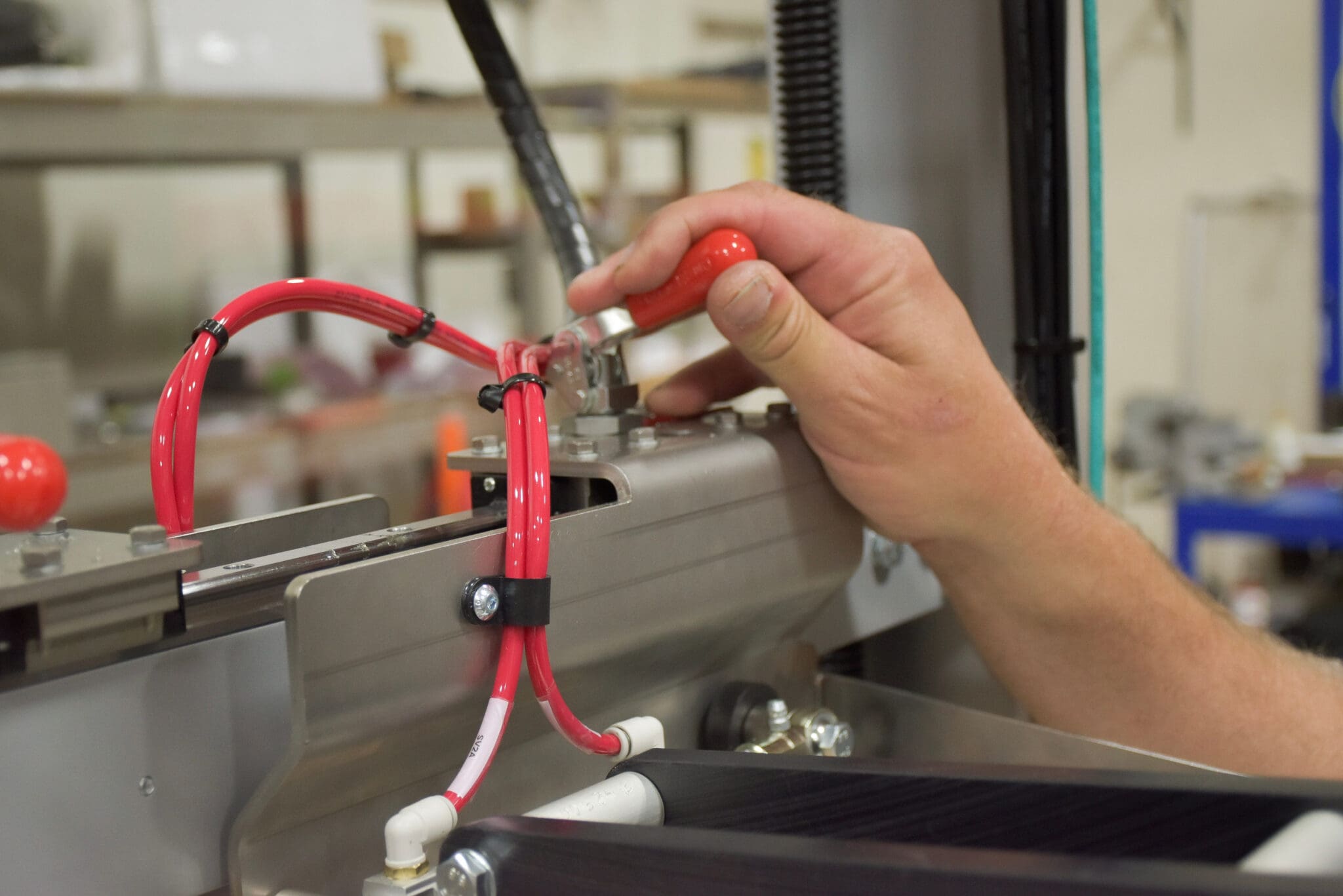
These are the main drivers. Machine design is the foundation. Clear settings, accessible changepoints, and easy lockdown makes a foundational difference – especially when compared with an overly complex and inaccessible machine.
Processes are also important. They can be written down as standard operating procedures (SOP) and used for training. Then, through a continuous improvement mindset, they can be streamlined as much as possible. Changeover is similar to a pit stop in racing – it takes a team that knows what they’re doing to be effective. And sometimes that just takes time, repetition, and patience.
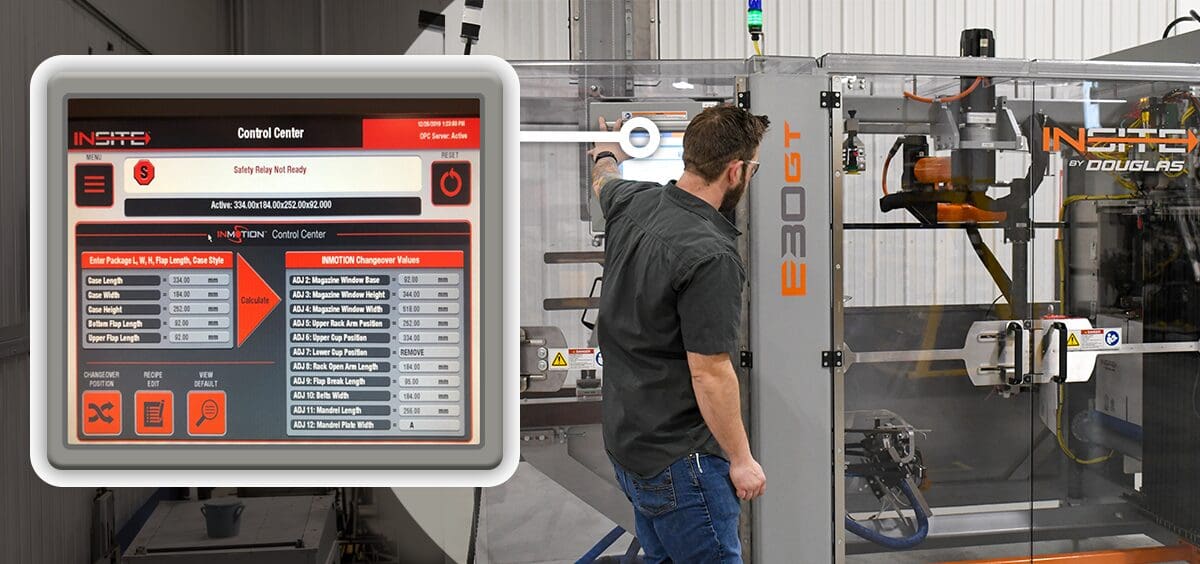
And like processes, operator skill makes a difference. Operators improve with proper training, but also with each repeated changeover. Unfortunately, the industry’s workforce is shrinking, and workers are less experienced overall. On some machines, special technologies (e.g. parameterization and recipe-driven adjustments) have been designed to compensate.
Buyer’s Tip
Vendors who understand market realities are continually working to fill the gap. They will provide documentation written at an accessible reading level, and step-by-step guidance will be programmed into their machine’s human-machine interface (HMI). If an inexperienced workforce has caused problems for your operation, consider how the right vendor might open doors.
Machines Built for Changeovers? Six Questions to Ask Before Purchase
If machine design is one of the main drivers of changeover time, then understanding how a machine performs in changeovers is a key buying consideration. Here are six questions you should ask before you sign the purchase order (PO):
1
What changeover time can your machine achieve with our sizes?
Make sure you get both numbers: time to changeover mechanically, and through to first good product. A machine that restarts in minutes, may take half an hour to produce cases up to standard.
2
Will we need new change part sets if we add SKUs in the future?
If you expect your product mix may expand, ask whether you’ll see cost or time increases in the future. Understand what range your machine covers, and whether parts sets are used to compensate.
3
What’s driving your rated changeover time?
Is the vendor’s changeover speedy because the machine is built for it, or because the operators have worked on the same machine design for months? Know what their main driver is, so you know how the machine will perform with your line.
4
How much training will an operator need to reach your rated changeover time?
This question makes a difference depending on your team’s skill level and tenure. A changeover time that only a highly experienced technician can achieve isn’t helpful if your workforce is primarily new.
5
What documentation and step-by-step guidance come with the machine?
Are the instructions clear, readable, and available in different languages? And another factor you may not have thought about: are you going to be scrambling through a lengthy manual, or are instructions built into the HMI?
6
How will consumables be impacted by changeovers?
Tape and glue settings can be finicky and sometimes need adjustments with each changeover. Understand what guidance is available to avoid waste and downtime when handling adhesives.
Changeover Time: A Real Metric with Real Costs
Regardless of how many changeovers you’ve seen in your day, changeover time is an important metric for automated packaging lines. It’s not only a metric for planning schedules and training regimens, but also a real cost item that needs to be budgeted for.
Labor, re-tuning, troubleshooting, consumables, and OEE are all impacted by the speed of your changeover. Make sure you know how your team performs, and how your machine is going to help or hinder them. And next time you purchase a piece of equipment, look for the vendor and the machine that’s going to set your line up for changeover success.
Interested in Changeover-Efficient Machinery and Vendor Guidance?
Give INSITE a call. Our team of specialists will answer questions, evaluate your line, and walk you through equipment that’s built for flexibility and changeover performance.