Introduction
At a Glance
Factory acceptance testing (FAT) is the last step in your packaging project, before the machine is shipped to your facility. It’s a formal test, done in your vendor’s plant, to ensure that your machine meets all of your expectations – as specified when you were quoted.
What does a FAT check? These three factors form the foundation:
- Case Size Compatibility
- Run Rate
- Quality
Does the machine run the case sizes you specified? Does it run them well?
Does it run at the speed you were promised?
Does the finished machine meet your expectations? Is the output up to standards?
Oftentimes, the machine merits a FAT that goes beyond these three checks. That’s when you need to ask the right questions, and know when to pay the extra price to get what you need.
Have you ever heard the factory acceptance testing (FAT) horror stories? The ones where the machines pass testing and are shipped to the customer’s facilities before they realize they don’t actually meet expectations? The customer is left with an underperforming machine in every one of their facilities across the nation.
It’s a horror story because it fails to complete the core purpose of a FAT: to confirm that the machine meets expectations.
If you’re worried about your FAT becoming a horror story, we’re here to settle your fears. FAT preparedness starts with understanding its purpose, expectations, and risk. The truth is that every good vendor wants you to leave their facility knowing the right machine is coming to yours.
In this article, we’ll cover:
- The definition and purpose of a FAT
- What FAT tiers include, and how much cost they add
- When a simpler FAT is enough
- What a standard FAT checks, and what questions to add
What Is a Factory Acceptance Test (FAT)?
A Factory Acceptance Test (FAT) is a formal, one-time evaluation of your machine, at the vendor’s facility. Regardless of what type of machine you are purchasing, the FAT sits as the last barrier before the equipment is shipped to your plant.
The purpose is to run your actual product through your actual machine, to make sure it meets all expectations before being shipped and installed in your facility. It bears the opportunity to raise concerns about run rates, materials compatibility, safety standards, and more.
What’s key to understand about the FAT is that it’s really your last chance to make changes to your system, without guaranteeing the retrofit costs (certain adjustments may still be considered retrofits at this level). Once the machine ships, the price of changes increases, and you bear the responsibility.
What’s the Difference Between FAT and Commissioning?
The terms “FAT” and “commissioning” are often used interchangeably. But they refer to different stages and locations of testing. Here’s how the two differ:
- Factory Acceptance Test (FAT) – Refers to testing that happens at the vendor’s facility (or in their “factory”). It occurs before the machine ships to your plant.
- Commissioning – At INSITE, we call commissioning “site acceptance testing” (SAT). It refers to testing that happens at your site, after the machine has arrived and been installed.
Both tests intend to meet the customer’s wishes, but one happens under your roof, while the other is a bit more reliant on the vendor.
A Note on FAT Limitations:
Something worth understanding is that FAT isn’t exactly a true representation of production. While the aim is to reflect real conditions as much as possible, the product being used in the machine is virgin – which means that it has never been filled or run through an actual line before reaching the machine.
That might make your FAT results a little different than what you will see under real production conditions.
How Will My FAT Run? Cost, Tiers, and Training
The term “FAT” is used to refer to all “factory acceptance tests,” but the reality of how a FAT is run depends on the vendor and contract. Vendors typically offer a few different options, with three tiers being pretty typical:
Standard
The vendor runs the FAT asynchronously – your case sizes run through the machine, they record it, and then send the video for your approval.
FAT Options
Included/Not Included
Live Interaction
→
None; communication done digitally
Scope Customization
→
Limited to what is communicated beforehand, up to vendor discretion
Additional Cost?
→
Usually none
Remote
The vendor runs the FAT with your team on a video call. The cameras are on the machine as it runs your case sizes, and there is some real-time discussion about how things are going.
FAT Options
Included/Not Included
Live Interaction
→
Some; communication done in live video call
Scope Customization
→
Limited, but open to live discussion and adjustments
Additional Cost?
→
Some additional cost
On-Site
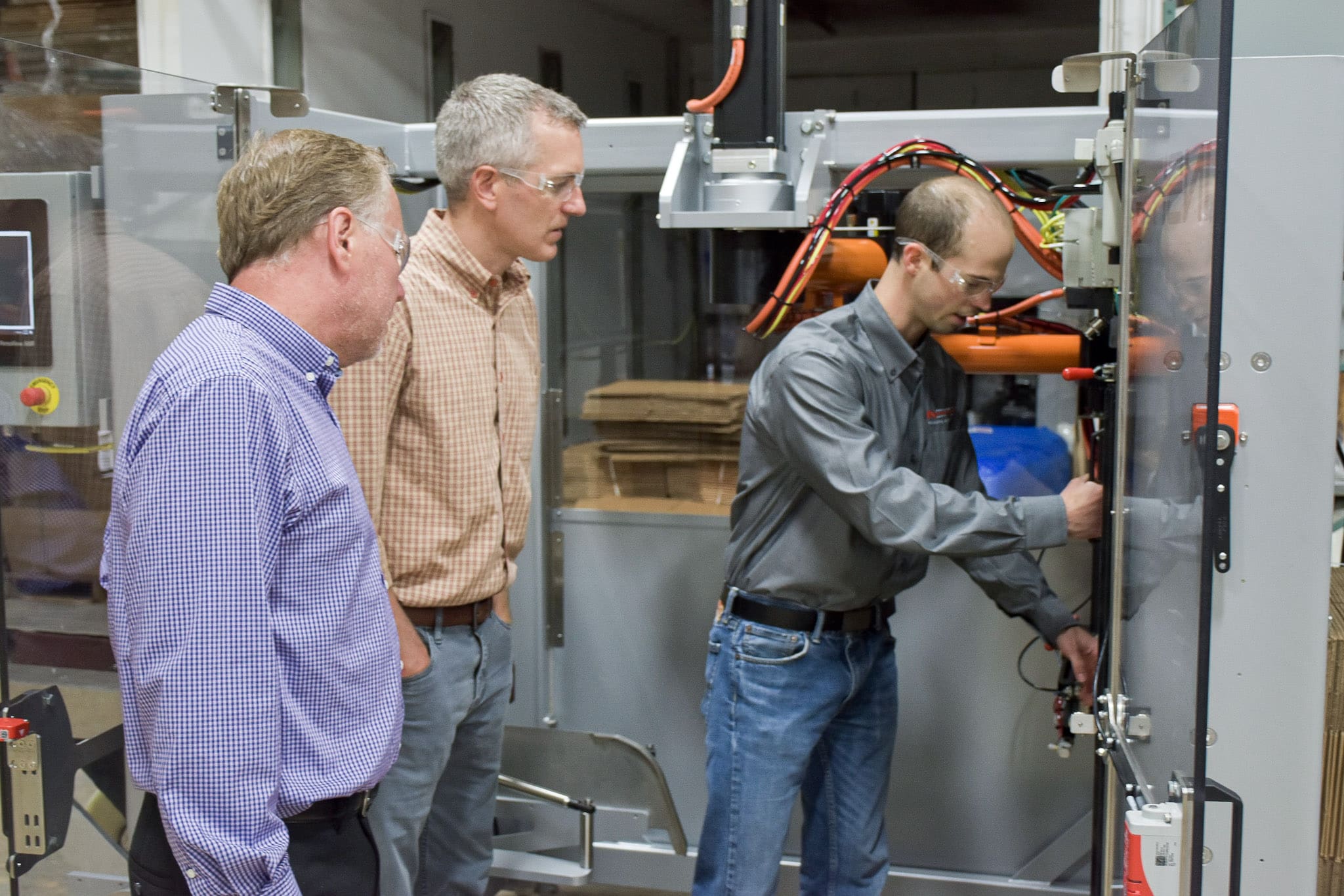
You travel to the vendor’s facility and conduct the FAT in person. Your case sizes and test product runs through the machine, and your team can watch and ask for additional testing as the FAT is performed. You get the deepest understanding of your machine before installation, and there are some hands-on training opportunities.
FAT Options
Included/Not Included
Live Interaction
→
Yes; your team and the vendor’s team collaborate in person
Scope Customization
→
Takes time to organize vendor’s support professionals, but you have live opportunity to request further testing and adjustments
Additional Cost?
→
Highest additional cost
It’s worth considering how you can use the FAT to your benefit. Some smaller operations pay the extra on-site FAT costs so their team has hands-on training opportunities. This allows them to do the rest of the machine installation and training at their facility, without much additional cost.
When Is the No-Cost FAT Enough?
We are advocates for an in-depth and purposeful FAT. However, that doesn’t mean every customer should go for the most expensive tier.
Two factors usually lower the risk enough to say the video review is sufficient:
- If there is an existing vendor/customer relationship, you likely already trust the vendor’s discretion to a degree, and there is less to verify
- If the machine is relatively standard; the more repeatable a design, the more the machine is a commodity product with a track record that informs expectations
The simpler and more standard the machine, the less you need to verify thoroughly. That’s when the case can be made for the standard FAT.
What Should Be Checked at a FAT?
At the core of a FAT, three things are checked:
Case Size Compatibility
Does the machine run the case sizes you specified? Does it run them well?
Run Rate
Does it run at the speed you were promised?
Quality
Does the finished machine meet your expectations? Is the output up to standards?
These three checks form the foundation of any FAT. However, most vendors will agree to do some additional testing if you request it – for example, vendors will run a changeover if you ask. This allows you to confirm that changeovers run as expected.
What Additional Testing Opportunities Do We Have?
Which additional questions and tests you request is really dependent on your machine and your needs. But something we recommend all customers ask for is a materials evaluation.
Get your team in the same room with the vendor to talk about case blanks (and even glue and tape). With new machines, tolerance and corrugate variability issues can surface fast. It’s best to catch them at the FAT stage, when the machine is still under your vendor’s responsibility and before production has started.
What Should I Ask at a FAT? Questions for Before Sign-Off
In most cases, the standard FAT check leaves some questions unanswered. That’s why it’s important for you to enter the vendor’s facility with some of your own questions prepared.
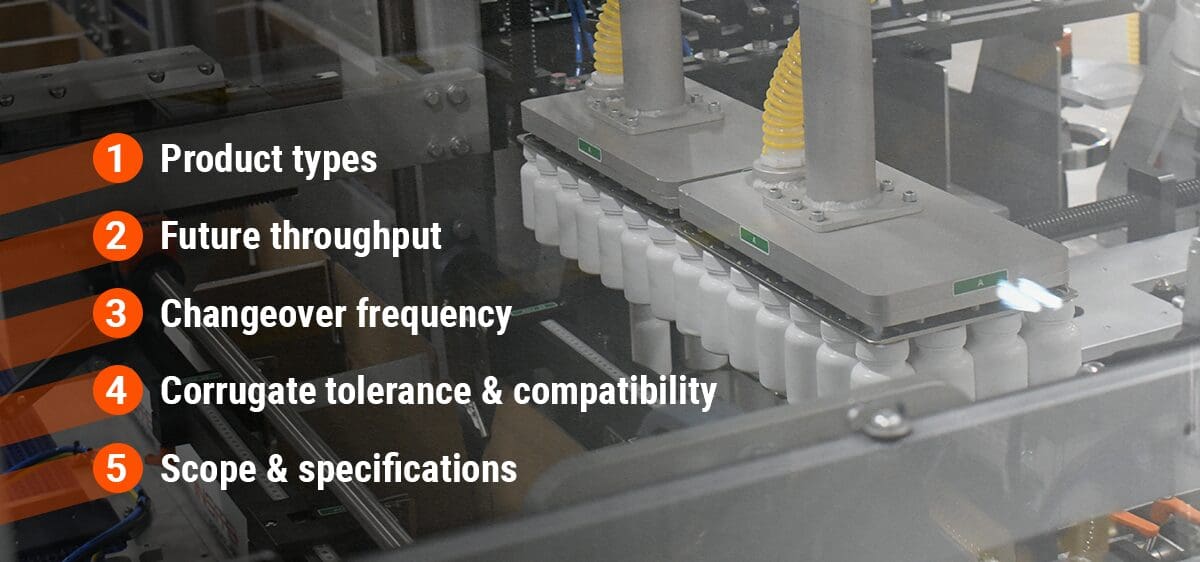
Here are the five questions we recommend you ask before officially signing off at the FAT:
1
Does the machine run our specified case sizes, at the rate we were quoted?
This goes back to the core FAT checks. A good vendor should already be testing for this at the FAT, but confirm it’s thoroughly answered before you sign off. Running at rate is actually one of the most common FAT problems.
2
Does the output/finished cases meet our expectations?
Another foundational check. You’re not just making sure the machine runs; you’re confirming that it runs to your standards, that it’s outputting at a quality you will be satisfied with.
3
Has every agreed-upon spec been verified?
Don’t sign off on your FAT with assumptions. Ensure that all of your agreed-upon specs are verified on the machine – this includes things like safety circuitry and coding.
4
What sort of product are we watching run?
A FAT usually tests with virgin product, not what’s been cycled through every machine on your line. Make sure you confirm whether that gap exists, so that you can adjust your in-house expectations accordingly.
5
Has anyone reviewed our case blank tolerances and evaluated our corrugate specs?
This is your chance to catch material compatibility issues, while there’s still time to adjust tolerances and work with your supplier before production begins.
What to Expect During a FAT? The Depth Your Project Asks For
A FAT is what you make it. You have to advocate for your needs, ask the questions that will get you there, and pay the cost that’s required. But what to actually expect from your FAT rests on three factors:
- Which tier meets your level of risk?
- Is your machine standard or customized?
- How much verification do your specs require?
A standard machine with a vendor you already trust might only need a video. But a custom machine, especially if you’re buying more than one, merits the extra cost. A FAT is never free, but it’s a lot cheaper than discovering gaps and retrofitting once the machine is in your facility.
Looking for a Vendor Who You Can Trust with Your FAT?
Schedule a call with INSITE. Our team of specialists will answer questions, evaluate your line, and help you explore automation – so you can arrive at your FAT with a vendor you trust.