Introduction
At a Glance
Case loaders are one of the most expensive machines on an automated packaging line. And they range widely in price: anywhere from $350k to $1M. The range is broad because of all the potentially unknown factors at first vendor conversation.
Many of the “unknown factors” are actually cost drivers. Here are the six main case loader cost drivers:
- Automation Type – Robotic or conventional?
- Motion – Intermittent or continuous?
- Product – How is your product arriving? What does it require for packaging?
- Load Configuration – Top, side, or end load, which will suit your line best?
- Rate – What speed will your loader need to sustain?
- SKU-Mix – How broad is your range of SKUs? Which need to be tested before install?
These are the factors informing where your case loader cost falls. But the best way to really understand how your line will impact case loader cost, is to discuss your operational specifics with vendors.
Case loaders are often the most expensive machine on an automated packaging line. They range in cost anywhere from $350,000 to $1 million. A lot of buyers are caught by surprise when they see a machine quote come in – you may be asking, what really goes into the price?
A lot more impacts case loader cost than most buyers assume. Chip bags and bottled drinks don’t load the same way, and a machine that’s built for one will underperform with the other. Before a price is estimated, there’s all the considerations of speed, motion, tooling, and more. The decisions made along the way will impact the cost you finally see on the purchase order (PO).
In this article, we’ll cover:
- Why case loader price varies so widely
- The six main case loader cost drivers
- When to go for a cheaper or simpler loader
- Questions to ask and next steps to take
How Does a Case Loader’s Role Impact Price?
When somebody thinks about a secondary packaging line, they’re probably picturing the machine putting product in cases – they’re likely thinking of the case loader. Case loaders make up the heart of what we consider “packaging.”
While a case erector purchase may require the machine to adjust to outlier sizes or styles, the engineers are nearly always expecting a corrugate case. With a case loader, however, one manufacturer’s model may see hundreds of different products. That’s a lot of variation case loader engineers are working with.
Because there’s so much possible variation in loading, cost is relatively broad in range and scope. It’s ultimately driven by the product and format factors at play.
What Drives Case Loader Cost? The Six Main Pricing Factors
Case loader cost is driven first by the baseline factors – who the manufacturer is, what type of model you’re looking for, etc. Then, there’s all of the operation-specific factors.
Here are what we consider the six main pricing factors of case loader cost.
Automation Type
Conventional Automation
Conventional systems are built with traditional mechanics (e.g. chains, collators, etc.). They cost less upfront but rely on mechanical wear parts throughout the life of the machine.
How Do Case Loaders Compare to Drop Packers?
Drop packing is a rudimentary form of conventional automation. Drop packers do exactly as their name suggests: drop product into a case from above. They provide a relatively simple option for products that don’t require pack patterns and don’t take damage from falling (e.g. chip bags).
- Major strengths: Mechanical simplicity, low-cost, small footprint
- Major weaknesses: Prone to product damage and downstream stoppages
Case loaders, like INSITE’s design, offer a slightly gentler alternative at a comparable price. This makes simple case load designs good choices for operations looking to upgrade from drop-load breakage and stoppage.
Robotic Automation
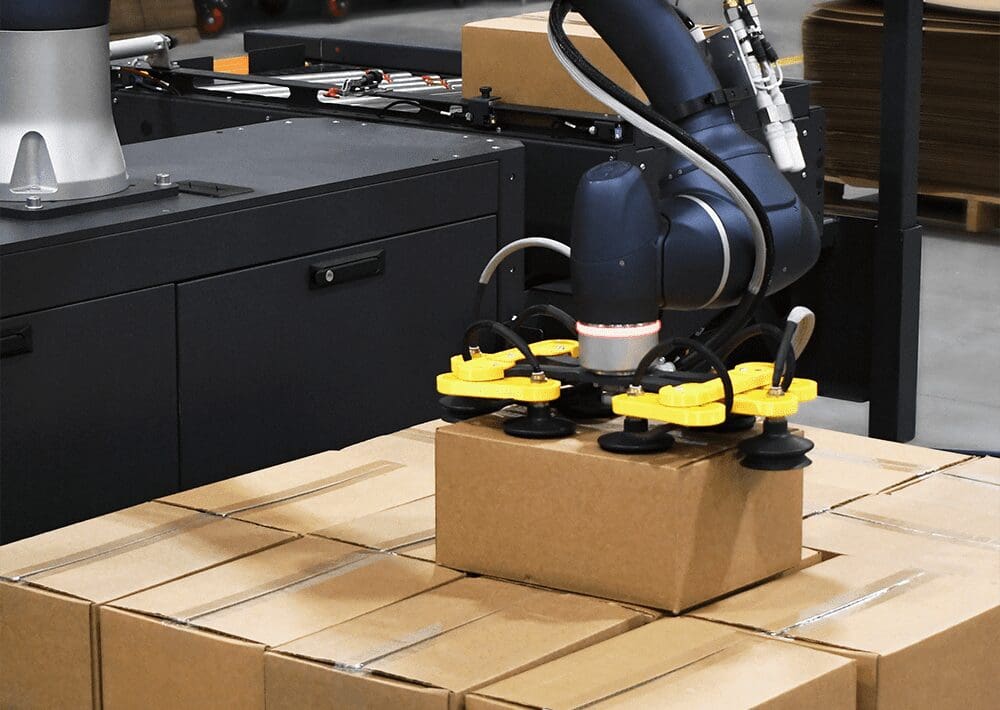
Robotic systems perform very similar work to conventional systems but do so through a single end-of-arm tool. They cost more upfront but have fewer wear parts and see benefits in changeovers and flexibility.
Robots are certainly appealing, but there’s rarely a one-size-fits-all answer with automation:
Conventional automation has a broader market and is generally more familiar – making it a good option for lesser-skilled teams. Robotic automation requires more technological know-how in maintenance, but excels with high variability and frequent changeovers.
The right answer depends on what is more valuable for your team. What’s the roadblock your line is facing?
Motion
A major price factor for case loaders is their type of motion. Most loaders run intermittently: product stops and starts as it works through the machine. Continuous-motion loaders run as the name suggests: continually.
The difference between the two is simple, but the choice affects componentry, speed, and ultimately price:
Type
Speed
Price
Intermittent-Motion
Autopopulated Label (Mobile Only)
~15 to 30 CPM*
Autopopulated Label (Mobile Only)
~$350k – $500k
Continuous-Motion
Autopopulated Label (Mobile Only)
Up to ~80 CPM*
Autopopulated Label (Mobile Only)
~$750k – $1M
(Price can extend beyond $1M for certain capabilities and designs)
*CPM: Cases per minute
These estimates only consider rated specs. Depending on your product – especially product weight – your line may not be able to achieve these rates. For example, especially heavy goods often need to operate below the machine’s rated speed to maintain reliability in packaging.
Product
Since case loaders have to run many different products – different shapes, weights, sizes, etc. – price is adjusted once vendors know product specifics. Here are a few of the big ways product specifics drive cost:
How the Product Arrives
Product collation (before the loader) determines what infeed features need to be designed into the machine. Is your product already sorted and grouped for loading, or will the machine need to do so?
How the Product is Orientated
If your product has specific printing, weight distribution, or shape challenges, the product will likely need to be orientated a certain direction for loading. If your machine will complete this step, that impacts what functions are designed into the machine.
How the Product Must Be Picked
This question relates to machine tooling. The precision and fragility your product needs in handling, changes how the machine will pick product. Tippy, fragile, or rolling product may need more sophisticated tooling than simple rigid product.
Load Configuration
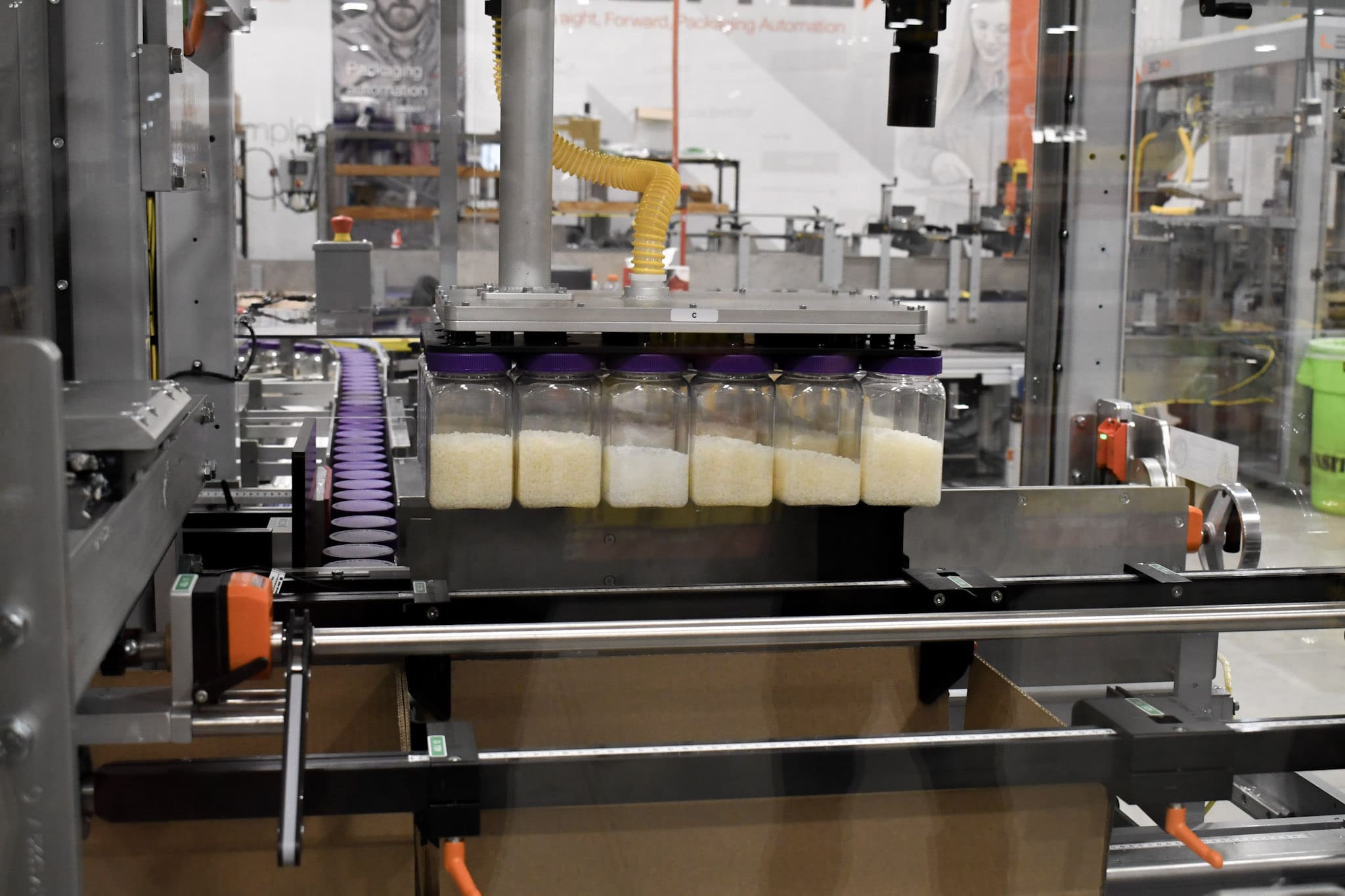
Case loaders standardly come in three configurations: top, side, and end load. Your product, line speed, and case type will together determine which configuration you need – and therefore drive or limit price.
Most products can theoretically run in all three, but there is usually one that fits your line best:
- Top Load
- Side Load
- End Load
Accommodates the widest range of product sizes, making it a natural choice for highly variable lines. It’s a more precise load with lots of flexibility, but it gives up a bit of speed to do so.
Generally the cheapest and simplest option, when your product fits – the concern for some products is damage, breakage, or tipping. The trade-off with side loaders is flexibility. A lot of products don’t suit side loading, and changeovers can be difficult.
Best suited for products that can’t be picked from above or pushed from the side. Essentially, when your product can’t do either of the other configurations, end loading is your answer.
Rate
Speed is one of the biggest cost factors across almost every form of automation. Faster machines not only mean more components to accommodate higher rates, but also a more robust build to handle sustained speeds.
SKU-Mix
A wide range of SKUs – regardless of type (e.g. pack pattern, product, case, etc.) – drives costs. More SKUs mean more potential change part sets, or a build that can accommodate more flexibility.
And in factory acceptance testing (FAT), any SKUs that need testing will cost more time and money. If you have a particularly broad SKU-mix, your vendor might suggest you limit low-volume SKUs or purchase an additional loader.
When Should I Go for the Cheaper Case Loader?
Going for the “cheaper case loader” is a challenging question. Not all vendors price their loaders by the same criteria. The “cheaper” loader might only include the base price, while the “pricier” loader might already account for additional costs like installation, commissioning, and servicing.
The more helpful question might be, “When should I go for the simpler case loader?” Our answer would be that the simpler machine is usually the right choice. A simpler loader is often backed by deep and intentional engineering efforts, making it easier to operate.
The flip side here would be if the “simpler” loader is actually too simple for what your product or line requires. If your product needs more complex tooling or loading configurations, a simple drop-load might end up damaging product. It all comes down to knowing your line and making the right choices to suit.
What Questions Should I Ask Before a Case Loader Quote?
Ask these questions to be informed of what is driving the quote price, and also the quality of the vendor you’re considering.
How many orientations will my product need before it arrives at the loader?
The answer will shape infeed design, loading style, and tooling. The more orientations it needs, the more it will cost.
Which loading configuration would best fit my product?
Loading style will impact price, but this question will also reveal the depth of consideration your vendor put into this decision.
How many of my SKUs will require factory acceptance testing?
The number of SKUs may multiply FAT costs to match – that’s a good piece of information to have early.
What does this machine’s type of automation imply for changeover and maintenance, over the machine’s life?
The answer to this question (robotic or conventional) might not alter purchase price greatly, but it will do a lot to determine the machine’s total cost of ownership (TCO), which you’ll deal with after the PO.
How does this machine load product? Will it suit my product’s needs?
If the machine loads by dropping product into the case, will your product see damage? Have your vendor walk you through loading for verification.
What rate can this machine sustain, given my product weight and fragility?
What the vendor boasts for rated speed, is not the same as sustained speed. It matters how the machine will perform with your product.
How Do I Plan for Price? And What Should My Next Steps Be?
It’s hard to anticipate the price of a case loader project. Your line, product, format, rate, and flexibility expectations will all come into play when determining overall price.
Regardless of how you’re feeling now, your best next steps are to talk to vendors. Only then will you get a real pricing estimate. Understand and record your specifics, speak to vendors, ask good questions, and evaluate quotes. Follow those steps, and you’ll be well on your way to the right loader.
GET A BUDGETARY QUOTE
If you’re looking for quick price information from INSITE, take a look at our budgetary price quote tool. Select the machine you’re interested in, highlight operational specifics, and we’ll give you an easy quote to start.
Are You Exploring Case Loader Options?
Schedule a discovery call with INSITE. Our specialists will answer questions, evaluate your line, and explore case loader details, so you find your system at the right price.