Introduction
At a Glance
Stretch film should be evaluated on three specs:
- Gauge – thickness, which is important in resistance to tears and punctures
- Prestretch – how far the film is stretched before it’s applied, which needs to match your stretch wrapper’s capabilities
- Containment Force – the actual pounds of holding force on the load
Gauge gets quoted most but matters least on its own, and containment force makes the most difference in transit. Choose film by the containment force your load actually needs. Go for the lowest film cost per load but verify it on your own product before standardizing.
The headline number on most stretch film quotes is gauge — the film’s thickness. It’s easy to compare and easy to assume that more of it means a more secure load. But in reality, more of it means more film you wasted and loads that still failed.
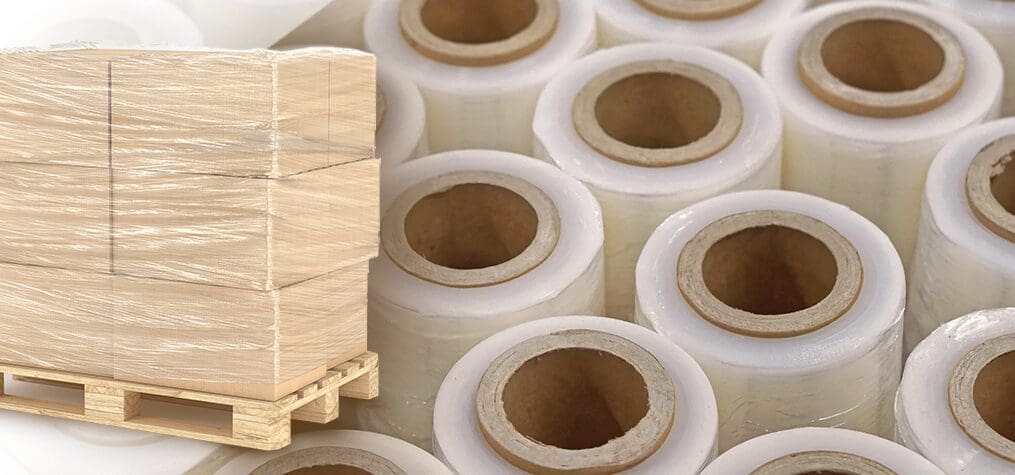
When thinking about ‘what stretch wrap film should I use’, separate what you’re buying from what you actually need. It’s not just thickness and stretch behavior, it’s how tension, prestretch, and number of revolutions combine into containment force. And how containment force ultimately impacts the way your load holds.
In this article, we’ll cover:
- What gauge, prestretch, and containment force mean
- Why containment force decides stability
- How cast and blown film differ
- How to choose the right film for your loads
- When a thicker or more premium film is the best value
The Three Specs that Matter in Stretch Film
When comparing and choosing stretch wrap film, gauge is often the primary (and sometimes only) factor considered. However, to make the right choice of film for your product, you should consider three factors.
1. Gauge
Gauge is how thick the film is, and it’s quoted in mils or gauge units – every 1 mil is roughly 100 gauge units. Gauge is the easiest spec to compare, so it’s often the one buyers lean on the most. Thickness is important for puncture and tear resistance, which is primarily relevant for especially sharp or heavy loads.
2. Prestretch
Prestretch refers to how far the film is stretched before it touches the load (think, the “stretch” in stretch wrap). The further film is stretched, the longer one roll lasts. And the longer one roll lasts, the lower film cost per load. The caution here is that films are designed for a target prestretch range, so if you push a film past what it’s built for, tearing and necking will occur.
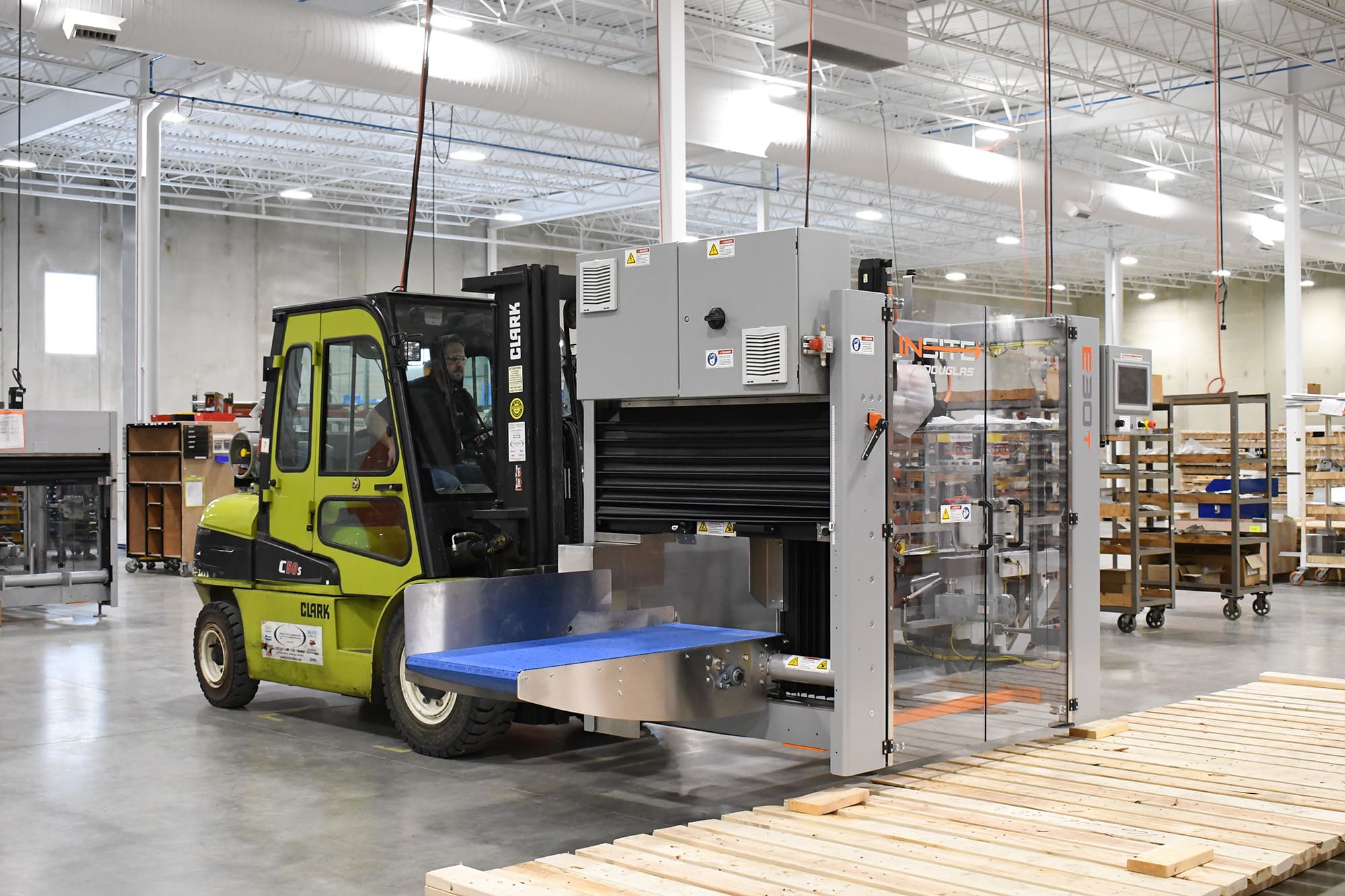
Note: Machine wrappers prestretch between two powered rollers, which apply a consistent, engineered tension. It eliminates human variation and maximizes film roll longevity.
3. Containment Force
Containment force is the actual holding force the wrapped film puts on the load – measured in pounds. Containment force is the biggest decider in whether a load arrives intact, but it’s the least likely to appear on a quote. The reason it’s so valuable is because containment force is the combination of film tension, prestretch, and number of revolutions.
To learn what other factors (in addition to stretch wrap) affect pallet stability, look at our article, “How to Stabilize a Pallet: Pattern, Containment, and Cube”
What Really Decides Stability?
The importance of containment force becomes clear when you consider its relational nature. It’s the product of tension, prestretch, and revolutions – as opposed to gauge’s singular nature. A thin, high-performance film, stretched to a high prestretch can impose more containment force than a thick film stretched poorly. And at a lower cost per load too.
To go a little further into this example:
Two films are wrapping two identical pallets. On one, a heavier-gauge film is applied with modest prestretch and light tension. On the other, a lighter film is applied with high prestretch (and therefore, greater tension).
The thick film looks substantial but proves ineffective when the load’s top layers shift on a hard stop. The lighter film holds tighter, putting more measured force on the load. When the hard stop comes, it holds securely. And as a bonus, it requires less material. So, it’s more secure and more cost-effective.
Pro Tip
Buying a thicker film to fix an unstable load usually treats the symptom. The fix is almost always more containment force, delivered through prestretch and tension — not more plastic. Film thickness is really important when considering the material and product you’re supporting. Is it heavy, sharp, metal, or wood? Then consider gauge for tear resistance. Otherwise, gauge is not your primary concern.
Construction Factors: Cast vs. Blown Film
Once you understand the specs, it’s important to understand the construction (the way the film is produced). The two main film constructions are cast and blown. They have different tradeoffs, and the right one for your operation just depends on the load.
- Cast Film
Cast film is made by extruding film onto a chilled roller. It runs quietly, unwinds smoothly, releases cleanly, and is generally clearer for scanning labels. It’s easy to see why it’s the common default for general palletizing. - Blown Film
Blown film is made by extruding and cooling film with air. It has higher tear resistance and holding power, so it’s suited for heavy and sharp loads. However, it’s noisier, hazier, and pricier.
If your load merits blown film, the protection it provides earns back the premium cost; but for typical stable loads, cast is likely the right choice.
What Is the Right Film for My Load?
Given all that we’ve covered so far – gauge, prestretch, containment, and cast vs. blown film – it’s time to make the educated selection. And to do so, consider the order of importance opposite of what the quote shows:
- Define the Containment Force
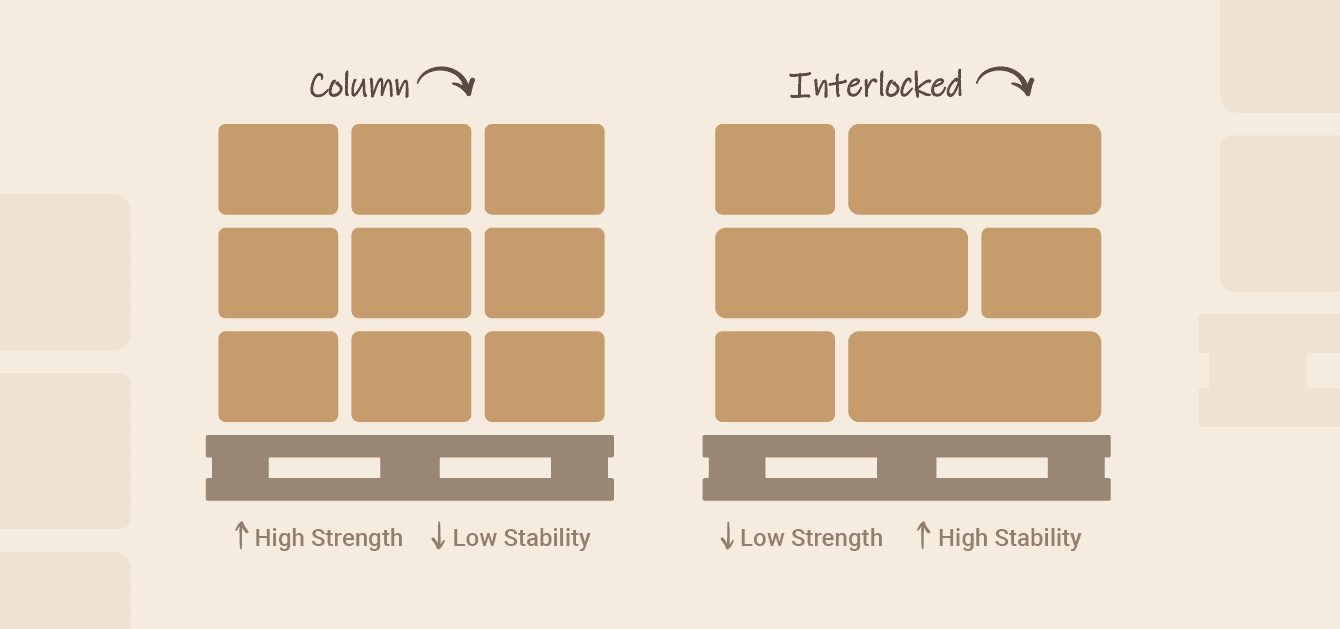
Lighter, interlocked, stable loads require less; while tall, heavy, or shifting loads require more. Know your load needs and make that clear when selecting film. If you can, measure containment force options on a load you know is stable to establish a baseline. - Match Film to Prestretch
A film built for high prestretch only pays off if your stretch wrapper can deliver it. Confirm your machine’s prestretch range before committing to a film grade. - Solve for Lowest Cost
Make sure what you’re measuring is at the required force, rather than at the lowest gauge or lowest price per roll. A pricier film that stretches further often costs less per pallet. - Test on Your Actual Product
Wrap real loads and check them the way the supply chain will. Run a stability or tip test, a short transit, etc. Test for the loads that typically come back damaged. Spec sheet numbers don’t account for your load profile, dock, or lanes.
Sometimes a load merits a thicker or more premium film. Always chasing the thinnest, cheapest-per-pallet film is the wrong move when it doesn’t meet your load’s needs. Reach for the heavier-gauge or blown film when:
- The load regularly punctures film (e.g. exposed corners, banding edges, raw metal or wood)
- Unit loads are genuinely heavy and dense
- Product ships in especially cold or freezer-like conditions, where film behaves more stiffly and is prone to tearing
In these cases, the toughness premium offers is doing the real work. Cutting corners to save cost backfires when your product comes back damaged and unusable. Thickness should be chosen for puncture and tear demands, while stability should be accounted for in containment force.
Gauge vs. Effective Gauge?
An 80-gauge film at 200% prestretch is far thinner on-pallet than on the roll. This is both expected and fine. It’s the difference between gauge and effective gauge. The engineered tension is doing the containment, not the residual thickness. Make sure you judge the wrapped result by load stability, rather than feel when it’s coming off the roll.
The Right Film Is the One that Supports Your Load
At the end of the line, the cost-effective film is the one that supports your load. And the one that does so at the lowest cost per pallet. Usually, this means:
- A film engineered for high prestretch
- On a matching stretch wrapper
- With adequate gauge and construction to puncture and tear demands
Define the containment force first, then match the film and machine to it, and prove its effectiveness on your loads before you standardize.
Looking for More Stable Palletizing?
Give us a call. INSITE’s team of specialists can answer questions, assess needs, and discuss options.