Introduction
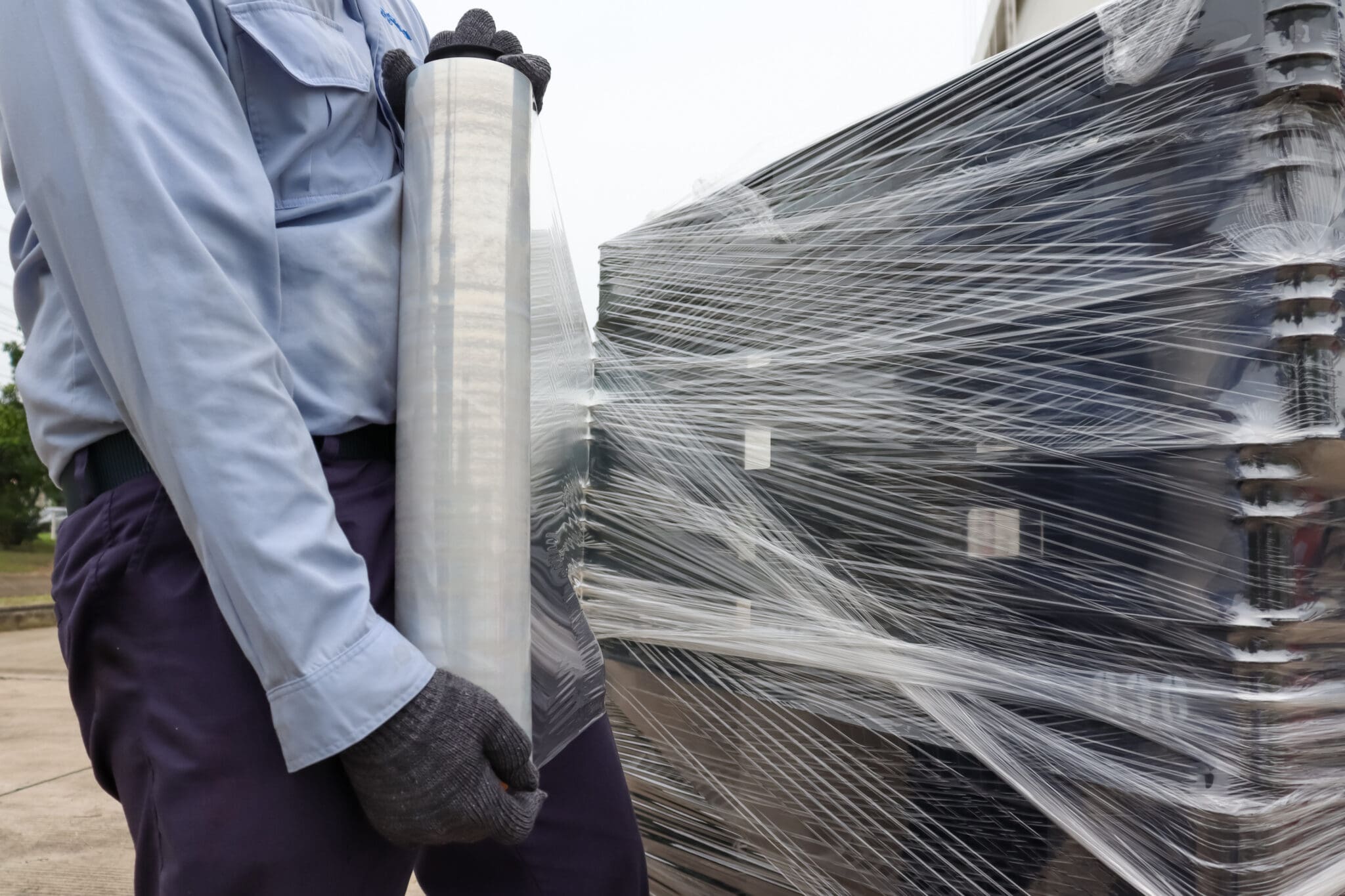
Stretch wrapping is the process of applying a continuous layer of extensible plastic film around a loaded pallet, unitizing the cases into a single stable load for storage and shipping. It’s almost universally the last step in an end-of-line sequence.
What It Does
A stretch wrapper dispenses film from a roll — either by rotating the pallet on a turntable or by rotating the film carriage around a stationary pallet — while applying controlled tension. As the film is stretched and applied, its elastic recovery creates a tight containment-force wrap that holds the cases together and holds the cases to the pallet.
The result is a unitized pallet that’s more resistant to load shifting, moisture intrusion, and handling damage during transit.
Types of Stretch Wrappers
-
Turntable Wrappers — The most common type in CPG. The pallet rotates on a powered turntable while the film carriage travels vertically up and down. It’s simple, fast, and cost-effective. It also requires clear space around the turntable for pallet rotation.
-
Rotary Arm Wrappers — The pallet stays stationary while a film carriage arm rotates around it. It’s better for unstable or very tall loads that can’t safely spin on a turntable. Typically higher cost.
-
Orbital Wrappers — The film ring passes horizontally around the pallet. This type is less common in standard end-of-line but is used for specific load geometries.
Automated vs. Semi-Automated
Semi-automatic stretch wrappers require an operator to attach the film, initiate the wrap cycle, and cut and tuck the tail. Fully automatic systems handle all of that without operator involvement, automating the film attachment, wrapping, and tail cut and wipe.
Semi-auto is appropriate for lower volumes or where a dedicated operator is already stationed at end-of-line. Full auto makes sense when the palletizer is running fast enough that the wrapper becomes a throughput constraint with manual film handling.
Pro Tip
Stretch wrapping is frequently the last automation step facilities add, and it’s often the one that makes the biggest ergonomic difference. Manual wrapping is among the most repetitive and musculoskeletal-injury-prone tasks in distribution.
Where Stretch Wrapping Fits Relative to INSITE
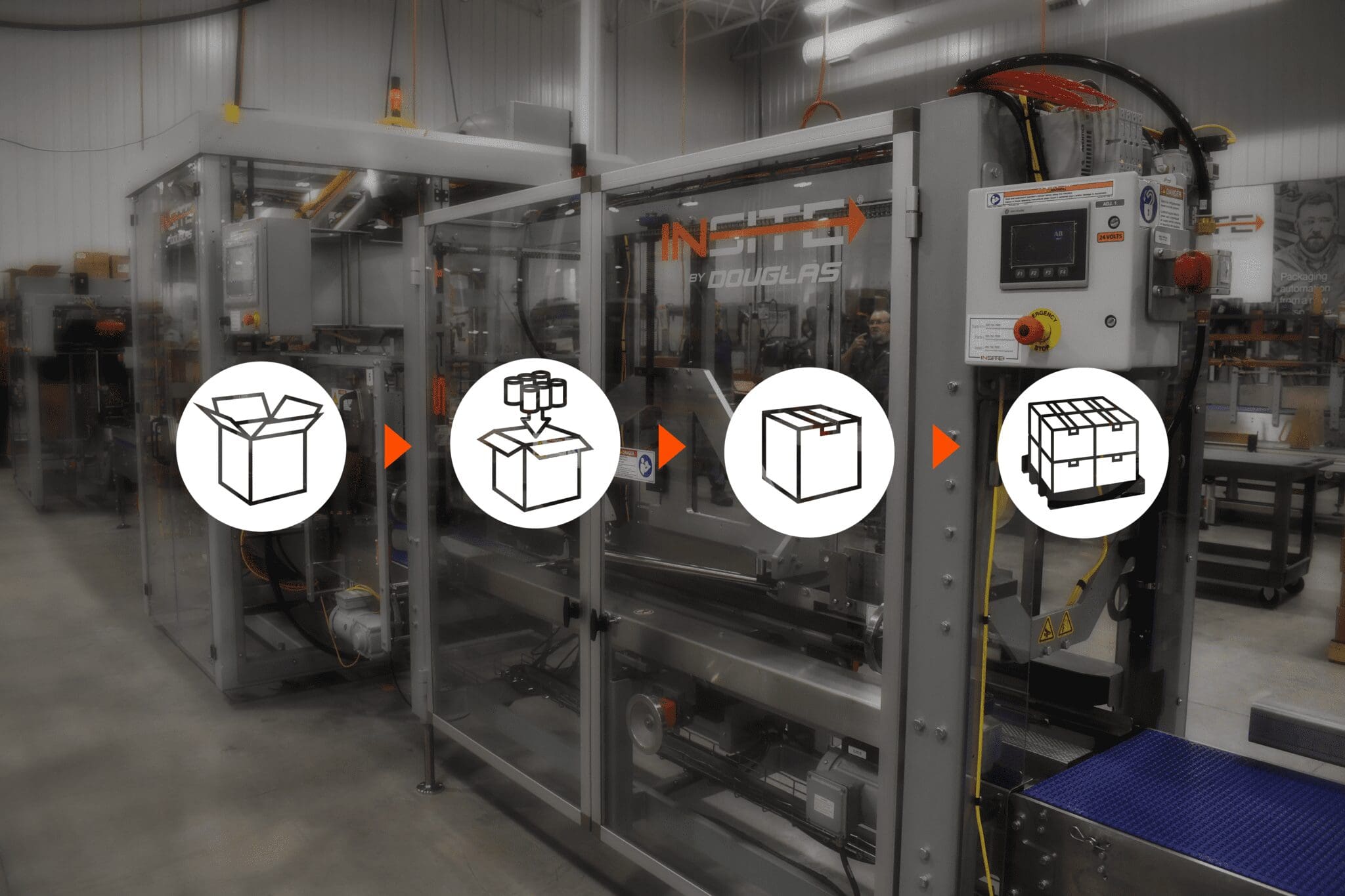
Stretch wrapping is end-of-line and downstream of INSITE’s core product set (case erecting, loading, sealing, and palletizing). That said, if you’re building a complete end-of-line system, it’s worth specifying the wrapper during that process so your palletizer discharge and conveyor layout can be designed to accommodate it.
Looking for End-of-Line Solutions?
INSITE’s team of specialists has over 60 years of knowledge in end-of-line systems. Reach out today.