Introduction
What is a case erector? If your end-of-line operation currently has someone manually pulling flat corrugated boxes off a stack and opening them by hand, you already understand the problem a case erector is designed to solve. Here’s a simple, yet more in-depth explanation.
The Basic Definition
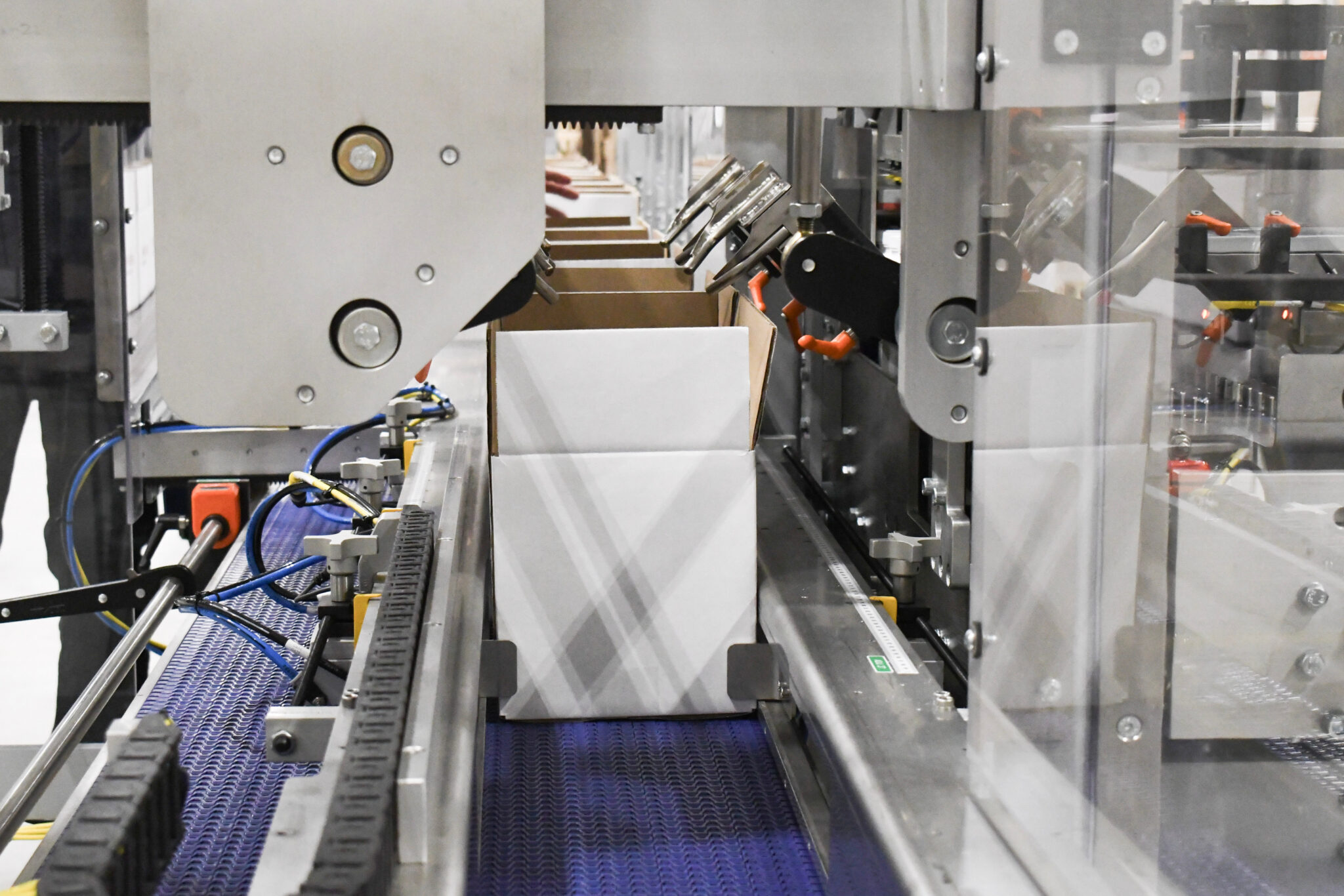
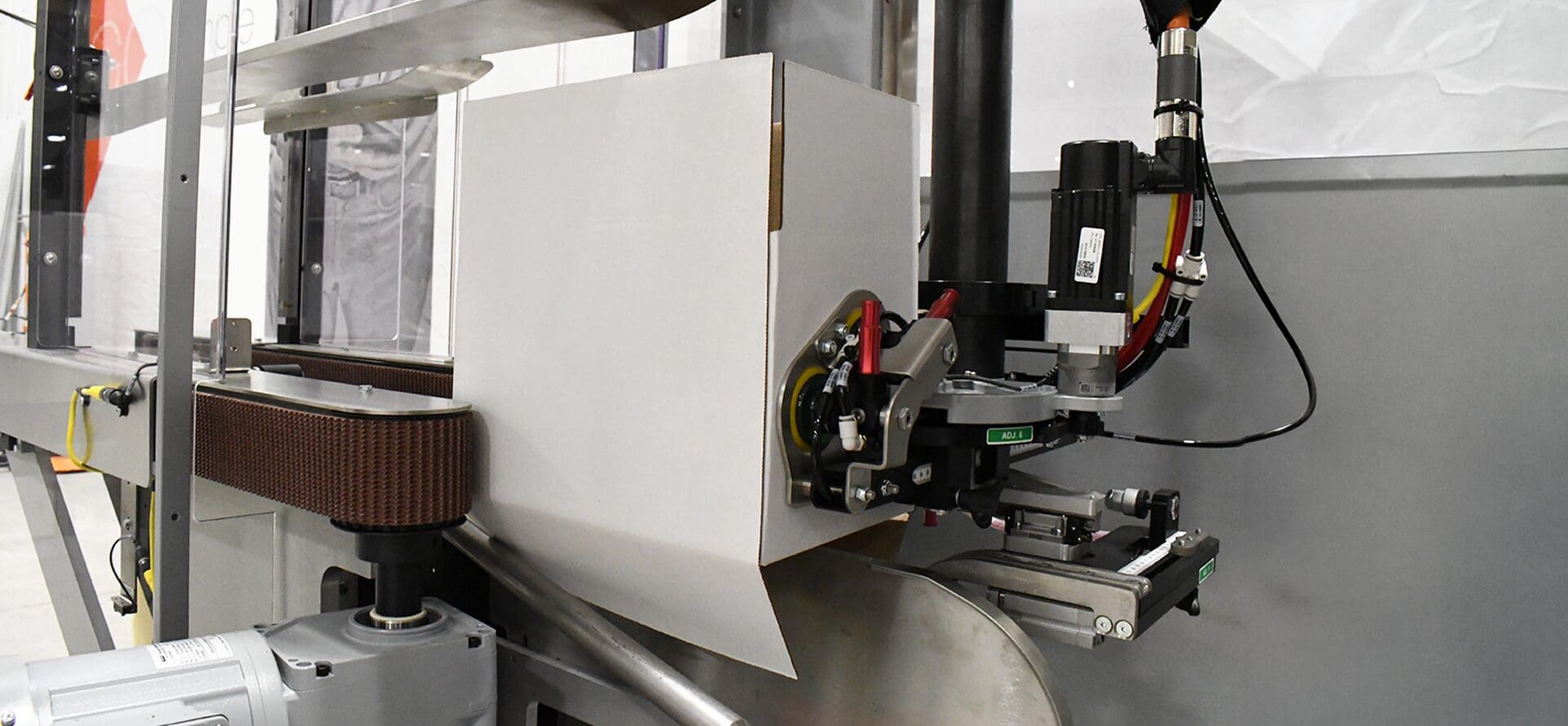
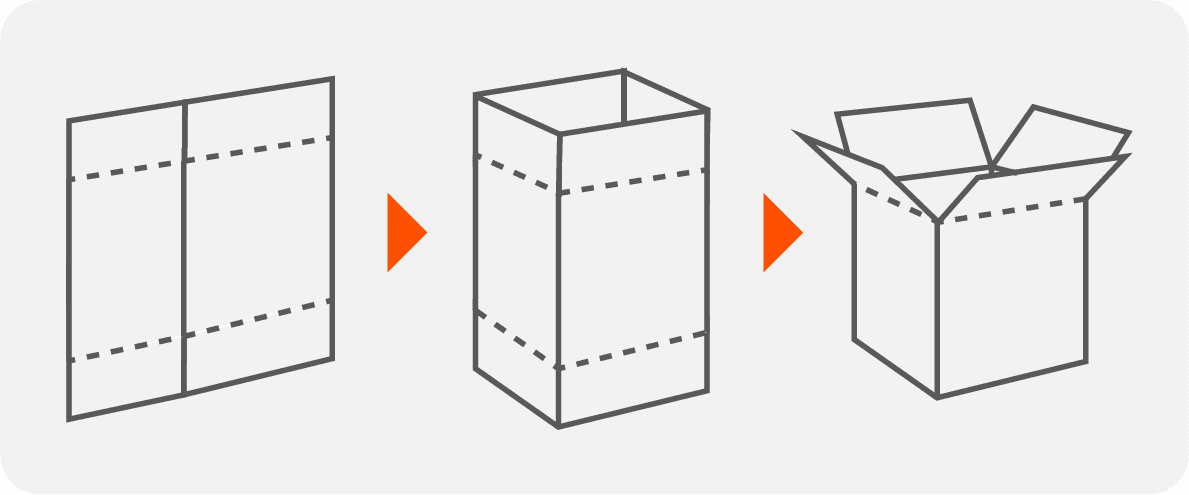
A case erector is a machine that automatically takes flat, knocked-down corrugated case blanks from a magazine (a stacked supply of these blanks), opens and squares them into a box shape, folds and seals the bottom flaps, and delivers them to the next step in the line — typically a case loader or operator loading station — ready to be filled.
It handles the opening, squaring, and bottom-sealing steps that are otherwise done by hand.
How Does It Work?
The sequence varies slightly by machine design, but the core steps are consistent:
-
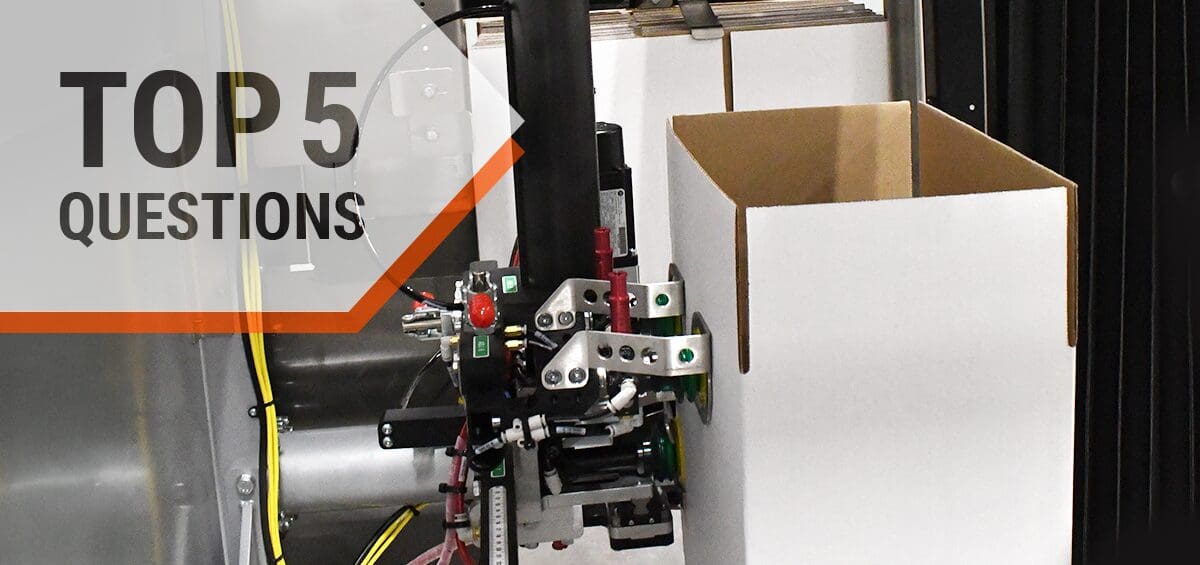
Blank Pick — A mechanical arm or vacuum cup system picks one flat case blank from the magazine
-
Opening — The blank is opened from its knocked-down flat state into a rectangular box form
-
Squaring — The machine ensures the case is properly squared at 90-degree corners before sealing
-
Bottom Sealing — The bottom minor and major flaps are folded and sealed with tape or hot melt glue
-
Discharge — The erected, bottom-sealed case is conveyed to the loading station
Modern case erectors perform this cycle continuously, often at speeds of 10–30 cases per minute or higher depending on the model and application.
What Types of Cases Can an Erector Handle?
Most case erectors are designed primarily for RSC (Regular Slotted Container) cases. This is the standard corrugated box format used in the vast majority of CPG applications. Some models accommodate HSC (Half Slotted Container) or other case styles, but RSC is by far the most common.
Case erectors are also typically designed to handle a range of case sizes, within limits. That range is one of the key specs to evaluate when selecting a machine for a multi-SKU environment.
What Does Automated Erecting Actually Save?
Manual case erecting is physically demanding, repetitive, and inconsistent. At higher volumes, it’s also a real bottleneck. Automating it reduces labor at the line, improves case quality (consistent squaring matters for downstream palletizing), and eliminates one of the more ergonomically taxing tasks in the facility.
Pro Tip
Poorly erected cases (ones that aren’t square or aren’t fully sealed on the bottom) are a common source of downstream problems. These cases are likely to tip on a conveyor, jam on a palletizer, or fail during stacking.
Need help evaluating case erectors?
Give INSITE a call to receive expert analysis and recommendations for your operation.